
BY PAIGE MAHONEY
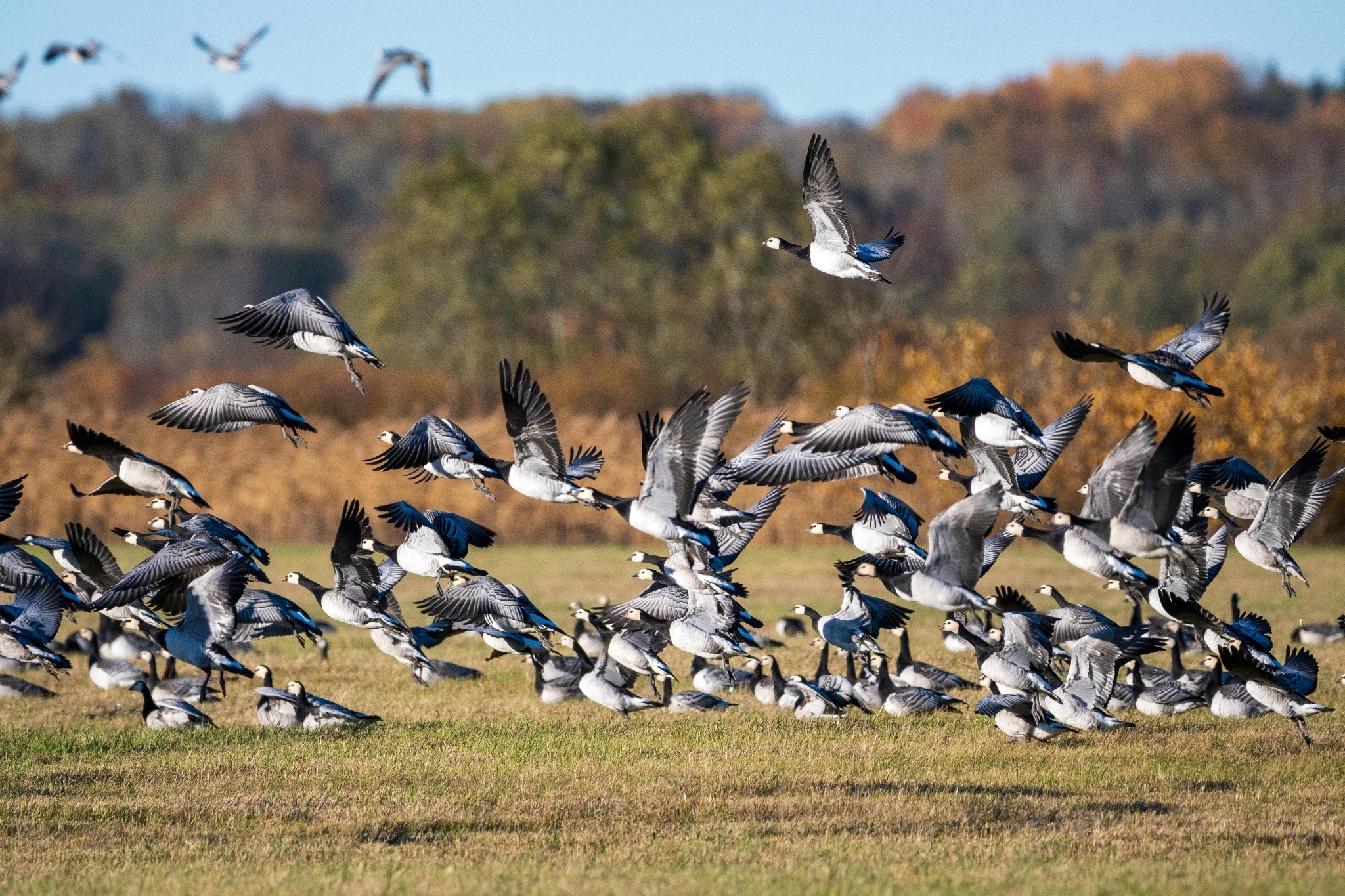
On September 25th, 2025, over 1.2 billion birds took to the skies, setting a record for the largest single-night migration total ever recorded.1 Bird migration is arguably one of nature’s most impressive phenomena, a feat of endurance that requires constant communication with other members of a flock and precise navigation skills. These long-distance journeys illustrate the extraordinary physiological limits birds can reach; the record for the longest known migration belongs to the Arctic Tern, which travels over 90,000 miles round trip each year as it traverses the earth from pole to pole.2 Other species have evolved certain physiological adaptations to allow them to undertake otherwise physically impossible migrations. The bar-headed goose, for example, is able to hyperventilate in order to fly through the oxygen-starved air above the Himalayas.2 Yet, despite its many wonders, avian migration has a more sinister side. When those 1.2 billion birds flew above North America back in September, they did more than just set a record. They inadvertently provided a means of transportation for the ardent hitchhikers that are infectious diseases.
When birds aren’t making headlines for their record large migrations, they have a tendency to appear in the news alongside the phrase highly pathogenic avian influenza. Highly pathogenic avian influenza, more commonly known as bird flu, first appeared in Hong Kong in 1996. The initial clue was when massive numbers of poultry started to get sick.3 A few human cases followed. Like in birds, the disease in humans was characterized by severe flu-like symptoms and high mortality rates; 6 out of 18 people with the disease died.3, 4 Further research would determine that the cause of the outbreak was the H5N1 strain of the influenza virus, which had, up until that point, not infected humans.3 Those 18 cases marked the beginning of bird flu’s rise. Over the next few decades, it would cause sporadic outbreaks, first in Eastern Asia, and then across the rest of the world, sometimes causing death in over half of infected people.3
Highly pathogenic avian influenza is not a typical seasonal flu. First, most people have never been exposed to a highly pathogenic avian influenza virus. Because seasonal influenza strains are constantly circulating, most people have some immunological memory towards the infection. Thus, the body can mount a strong immune response that results in more mild symptoms.5 On the other hand, the human immune system is naive to avian influenza viruses, creating the perfect conditions for a severe infection once someone is exposed.5 Secondly, infection with an avian influenza virus, especially H5N1, can cause lower respiratory complications, including pneumonia and acute respiratory distress syndrome.4 In humans, highly pathogenic avian influenza has a mortality rate of upwards of 50%—almost unthinkable in a world where most infectious diseases are treatable with antibiotics.6 Perhaps the one good thing about avian influenza viruses is that they are not easily transmitted from person to person. This quirk may very well be the only reason why we have yet to see a bird flu pandemic.4
At any given point in time, searching the internet for “bird flu” yields a concerning number of recent news articles. In late February, a flurry of stories hit the popular press about an outbreak in wild geese in New Jersey, Pennsylvania, and Ohio.7 From January 19th through February 19th, the United States Department of Agriculture reported confirmed cases of highly pathogenic avian influenza in 57 domestic flocks around the country, affecting over 9.23 million birds8. Comparably, relatively few cases of highly pathogenic avian influenza are reported in humans—just 71 in the United States since 2024.9 Similarly, between January and August of 2025, only 26 human infections were reported globally.5 Despite these low rates of human infection, the disease remains a looming threat to public health, sparking fear in epidemiologists and the general public alike.
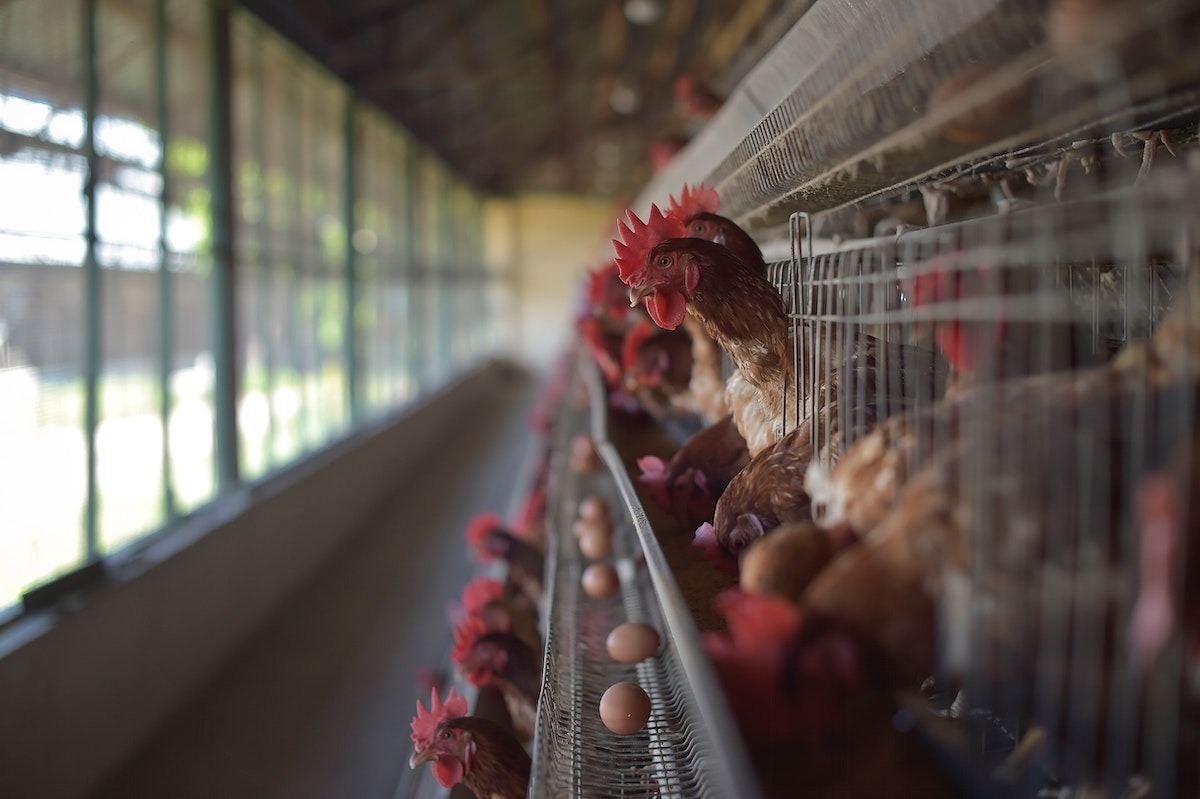
Aside from the severe disease and potential death caused by this pathogen, one key reason for that dread lies in the biology of all influenza viruses. Highly pathogenic influenza strains are, like other influenzas, RNA viruses. They therefore mutate at extraordinarily fast rates.3 At any given point in time, we could be a few mutations away from the emergence of a strain with pandemic potential; that is, one that is equally deadly as current strains, but that can also be easily transmitted from human to human. It could, theoretically, only take one spillover from wild birds into domestic poultry, and an additional spillover from poultry into humans, for highly pathogenic avian influenza to cause the world’s next pandemic. When you consider the sheer number of wild birds that shed viral particles as they fly over chicken coops or the numerous interactions between farmers and their livestock, this hypothetical becomes a lot more frightening.
That contact between birds and humans does occur. Humans usually become infected with a highly pathogenic avian influenza virus upon close contact with an infected domestic bird.10 Domestic birds are usually infected by sharing water sources or other resources with wild birds, which are the natural reservoir for many avian influenza viruses.3 Although some strains of avian influenza can cause severe disease in wild birds, these populations usually show no symptoms, suggesting that avian influenza viruses become highly pathogenic when they make the leap into naive domestic bird populations.11
From a pathogen’s perspective, birds are an excellent target and this usually mild disease presentation allows avian influenza viruses to capitalize on the ecology of their hosts. Many bird species live in large groups, creating opportunities for direct transmission between animals. Additionally, their formidable migrations present ample opportunities to infect naive populations during their journeys. Since the majority of infected birds do not become extremely sick, they are able to carry on with their migration, carrying the virus with them to far-off places that would otherwise be difficult for the virus to reach.3 Some birds have even been shown to shed virus before they begin to show symptoms, creating the potential for undetected transmission by seemingly healthy birds.11
Migratory birds are, in other words, the perfect host. Highly pathogenic avian influenza has certainly taken advantage of this fact: there is evidence that migratory birds played a key role in the virus’s global expansion in the early 2000s. By 2006, according to one study, the H5N1 influenza strain had spread from Hong Kong to 52 other countries.12 Using data on trade patterns and traditional avian migration routes, researchers determined that wild bird migration was the most important pathway for spread into and throughout Europe.12 Shockingly, introduction to 20 out of 23 countries was most likely caused by migratory birds.12
When birds fly south for the winter, they follow major migratory routes that serve as a sort of avian highway system. These flyways promote interactions between different groups of birds. Once again, danger lurks in this beautiful aspect of migration. As different flocks come together and break apart, they mix and redistribute whichever avian influenza viruses they are carrying.3 Flyways thus serve as conduits for viral dispersal and evolution. This dynamic has played out across the world, with the timing of H5N1 outbreaks across East Asia being linked to migration patterns of several bird species known to carry the virus.11 Likewise, the CDC reports that peaks in poultry infections in the United States tend to coincide with high levels of wild bird migration.9
These strong associations between flyways and outbreaks means that migration patterns could be used as a tool to predict the spread of avian influenza.13 Yet, climate change complicates this possibility. Already, certain species have begun to leave later for their migrations or settle in different locations and the United States Fish and Wildlife Service estimates that by 2050, about a quarter of the species observed at any given spot along a flyway might be different.14 As migration patterns change, so too might avian influenza virus distributions due to new interactions with both poultry and humans.
There are also likely to be more interactions between domestic and wild birds in the coming years due to agricultural expansion. As commercial farming operations increase in order to feed the world’s growing population, there will be more encroachment into wildlife habitats, resulting in more interactions with these animals, as well as altered migration patterns.15By many accounts, we are lucky that there has not been a highly pathogenic avian influenza pandemic; the disease is, in many ways, an “impending disaster,” as stated by one researcher in 2006.4 Although that disaster has not yet unfolded, it very well may. There is ample evidence to suggest that bird migration plays a pivotal role in avian influenza dynamics. It would only take a bit of modification of the always-changing avian influenza viruses and one unfortunate spillover for that migration to turn catastrophic. We would be foolish to pretend otherwise.
https://www.pexels.com/photo/flock-of-barnacle-geese-in-flight-during-migration-34155627
https://www.rawpixel.com/image/3372707
——————————
References
- Record-breaking Night of Bird Migration Detected with Radar. Cornell Lab of Ornithology https://www.birds.cornell.edu/home/record-breaking-night-of-bird-migration/ (2025).
- Lorenzo, I. Migration Marathons: 7 unbelievable bird journeys. BirdLife International https://www.birdlife.org/news/2018/06/27/migration-marathons-7-unbelievable-bird-journeys/ (2018).
- Lycett, S. J., Duchatel, F. & Digard, P. A brief history of bird flu. Philos Trans R Soc Lond B Biol Sci 374, 20180257 (2019).
- Wong, S. S. Y. & Yuen, K. Avian Influenza Virus Infections in Humans. Chest 129, 156–168 (2006).
- CDC. Global Summary of Recent Human Cases of H5N1 Bird Flu. Avian Influenza (Bird Flu)https://www.cdc.gov/bird-flu/spotlights/h5n1-summary-08042025.html (2025).
- CDC. CDC A(H5N1) Bird Flu Response Update March 19, 2025. Avian Influenza (Bird Flu)https://www.cdc.gov/bird-flu/spotlights/h5n1-response-03192025.html (2025).1.
- Roman, J. More than 1,100 geese just turned up dead or sick in N.J. Here’s the disturbing reason why. nj.com (2026).
- Confirmed Pathogenic Avian Flu in Commercial & Backyard Flocks. https://www.aphis.usda.gov/livestock-poultry-disease/avian/avian-influenza/hpai-detections/commercial-backyard-flocks (2026).
- CDC. A(H5) Bird Flu: Current Situation. Avian Influenza (Bird Flu) https://www.cdc.gov/bird-flu/situation-summary/index.html (2026).
- Avian Influenza. WOAH – World Organisation for Animal Health https://www.woah.org/en/disease/avian-influenza/.
- Tian, H. et al. Avian influenza H5N1 viral and bird migration networks in Asia. Proceedings of the National Academy of Sciences 112, 172–177 (2015).
- Kilpatrick, A. M. et al. Predicting the global spread of H5N1 avian influenza. Proc Natl Acad Sci U S A 103, 19368–19373 (2006).
- Lam, T. T.-Y. et al. Migratory flyway and geographical distance are barriers to the gene flow of influenza virus among North American birds. Ecology Letters 15, 24–33 (2012).
- What migrating birds can teach us about managing for climate change | U.S. Fish & Wildlife Service. https://www.fws.gov/story/2023-06/what-migrating-birds-can-teach-us-about-managing-climate-change (2023).
- Jones, B. A. et al. Zoonosis emergence linked to agricultural intensification and environmental change. Proc Natl Acad Sci U S A 110, 8399–8404 (2013).

