Two Earthquakes Bring Health Risks to Nepal

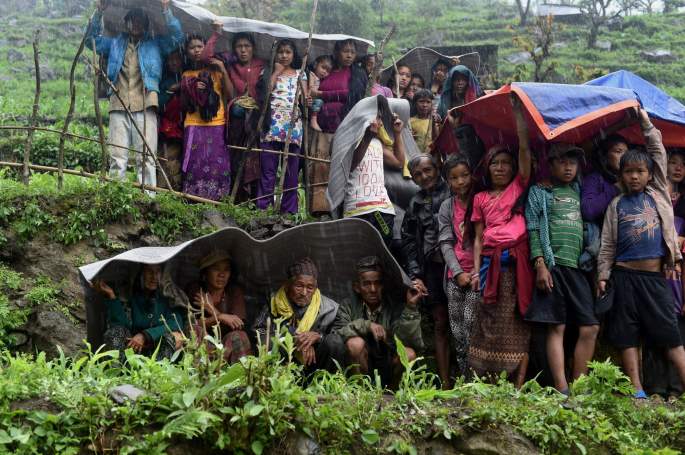
BY HARLAND DAHL *Previously published on Yale Monsoons' Blog A 7.3 magnitude earthquake hit Nepal last Tuesday, only two weeks after a devastating 7.8 earthquake shook the country on April 25th. These earthquakes killed over 8,000 people and displaced close to 3 million others. Today, Nepal’s government and organizations are struggling to rebuild critical infrastructure … Continue reading Two Earthquakes Bring Health Risks to Nepal
Global HIV/AIDS Activism in the Digital World

BY CAITLIN PURDOME In the United States, media coverage of the HIV/AIDS health crisis is no longer a priority due to an increasing perception that it is a manageable condition rather than a fatal diagnosis. Nevertheless, the virus remains a global health threat with millions of newly infected people and deaths each year.1 HIV infection … Continue reading Global HIV/AIDS Activism in the Digital World

Depression in Developing Countries

BY SREEJA KODALI In his book The Noonday Demon: An Atlas of Depression, Andrew Solomon, describes the “worst case of depression” he had ever seen. Maggie Robbins, charming and “always so lustrous with energy,” in her deepest depression, was “curled up on the couch in a tight ball, wincing as though someone were putting slivers … Continue reading Depression in Developing Countries

Southeast Asia: Regional Incidence of Tuberculosis in Cambodia

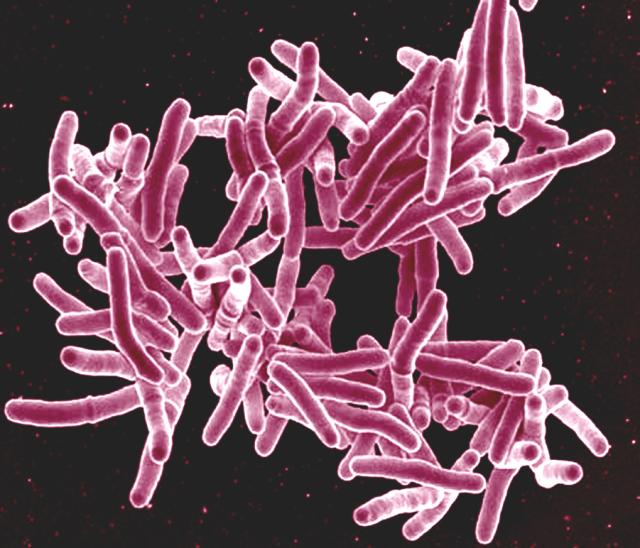
BY KEVIN CHEN Cambodia suffers from one of the highest rates of tuberculosis (TB) infection in the world.1 The prevalence of TB is 660 cases per 100,000 people, and the incidence of TB is 437 cases per 100,000 people.2 This is unacceptably high when compared to other developing countries in the East Asia and Pacific … Continue reading Southeast Asia: Regional Incidence of Tuberculosis in Cambodia

Extreme Hunger and Food Security: What the MDGs Got Wrong

BY CAROLINE TANGOREN As the Millennium Development Goals (MDG), which are eight international development goals established by the United Nations, draw to a close, incredible progress has been made on a variety of issues from maternal health to extreme poverty to environmental sustainability. One particular topic of interest is the eradication of extreme hunger, as … Continue reading Extreme Hunger and Food Security: What the MDGs Got Wrong

Failure to Treat Mental Illness: At Yale and in the Context of Global Health

BY MICHAELLA BAKER Yale exists as a microcosm of mental health issues, including the lack of a clear treatment process, long wait times, and the temporary therapy offered. Similar issues in treatment of mental health occur in America and on a global scale. The purpose of this report is not to minimize the issues Yale … Continue reading Failure to Treat Mental Illness: At Yale and in the Context of Global Health

Addressing Nepal’s Hidden Health Challenge: Depression

BY SOPHIA KECSKES Self-harm is the leading cause of death for individuals 15-49 years old in Nepal.[i] Nepal has the 2nd highest rate of DALYs (disability adjusted life years) caused by depression in the world, trailing only the United States.[ii] Estimates of the prevalence range of Major Depressive Disorder (MDD) and anxiety range from 18.4%[iii] … Continue reading Addressing Nepal’s Hidden Health Challenge: Depression

A Year in Review: The Ebola Virus

BY AMBER TANG It has been over a year since the Ebola epidemic began with a small village in Guinea in December, 2013. In this period of time, there have been almost 23,000 cases of Ebola with 9,177 deaths, the majority of which have taken place in Guinea, Liberia, and Sierra Leone. By now, the … Continue reading A Year in Review: The Ebola Virus

Global Health Risks of Non-State Transnational Terror

BY GRACE MAZZARELLA January 31, 2014 In September of 2000, the United Nations, through its member states, agreed on Millennium Development Goals (MDGs). The MDGs are a series of goals aimed at making measurable improvements in alleviating worldwide poverty, hunger, disease, illiteracy, environmental degradation, and discrimination against women within a 15 year period. Since its … Continue reading Global Health Risks of Non-State Transnational Terror

Senegal: Key Insights Coming from the Smallest Places

BY TALIA KATZ.Photography by Talia Katz. “i te foosi long.” You don’t know anything. Did I correctly understand my host mother’s succinct Malinke phrase? Did I really know nothing? Her remark, though valid, struck me hard. Intelligence had always been the one character trait I clung too. And as if to crystallize the meaning of … Continue reading Senegal: Key Insights Coming from the Smallest Places