
BY ESSEY AFEWERKI
On February 25th, 2026, Yale University’s School of Public Health was fortunate enough to host Dr. Sara Dubowsky Adar (ScD, MHS), professor of Epidemiology at the University of Michigan’s School of Public Health. Dr. Adar’s presentation, “Air Pollution Research to Inform Public Health Policy and Action,” outlined several of her key research projects on how to better address the multiple facets of the air pollution problem. Her talk delivered an important message on the need to unify the scientific process with targeted questions that aim to solve real-world problems in order to inspire tangible change.
Dr. Adar began by outlining the tangible consequences of air pollution on public health. The second leading cause of global disease burden, measured in years lost through death/disability to a disease (Disability Adjusted Life Years), air pollution is a massive issue that demands attention. Contaminants enter the lungs and cause reactions such as autonomic activation, inflammation, and oxidative stress. These reactions lead to bodily responses such as asthma, heart attacks, strokes, and hypertension.
In order to combat the effects of air pollution, Dr. Adar described a hierarchy of controls, or methods by which a given problem can be addressed. At the top of the hierarchy is the elimination of a pollution source (Removal). If this isn’t possible, substitution of the source for a less harmful pollutant is still beneficial (Replacement). If that still isn’t achievable, attempts can be made to mitigate emissions from the original source (Reduction). If no such measures can be reasonably enacted, personal protection methods can offer some degree of protection to affected populations. Observational studies can also be utilized to understand the effect of a pollutant without outside interference. With this framework established, Dr. Adar then went on to outline several research projects she was involved in that implemented each of the above methods into real-world practice.
The first of these projects attempted to combat pollution from diesel school buses, which disproportionately affects communities of lower socioeconomic status. Several methods were instituted randomly among populations, and the community-level effects were observed. A Replacement method, where the diesel fuel of the buses was substituted with Ultra Low Sulfur Diesel fuel, was implemented. Two Reduction methods were also introduced: Diesel Oxidative Catalysts, which convert contaminants from diesel fuel into carbon dioxide, and Crankcase Ventilation Systems, which directly leaked combustion gases back into the intake. This ensures the gases are burned instead of vented into the air. Finally, as a Removal measure, the oldest buses in certain districts were simply retired and removed from circulation. Dr. Adar found several promising results. Air pollution in bus cabins decreased by 45%, lung inflammation in children decreased by 15% (30% in the cases of asthmatic children), and school districts even saw 10% greater attendance. More importantly, the districts where the oldest buses were removed experienced the greatest benefits.
Dr. Adar communicated the incentives of pursuing these measures with the following key statistics. Since greater attendance in public schools leads to greater funding benefits, the $27 million dollars required to institute the Replacement and Reduction methods would result in $350 million dollars per year in benefits due to the resulting increase in attendance. Furthermore, if the oldest 15% of buses were removed, the predicted increase in attendance would result in over $1.3 billion dollars per year. Considering the recent EPA decision to no longer tie a monetary value to life, which makes calculating prospective costs such as these difficult, when asked about how such measures could be incentivized in broader contexts, Dr. Adar suggested that retrospective costs could be highlighted instead. These would illustrate the real-world consequences that have already been paid without such measures in place. Overall, the school bus study was a great multi-faceted example of how different mitigation methods can combat the threat of air pollution.
For the rest of the talk, Dr. Adar discussed a collection of additional studies that further contextualized the hierarchy of controls. In a Replacement study—where groups were instructed to either maintain their current driving habits, switch to electric cars, or switch to electric cars plus alternative modes of transport (walking/biking)—the most averted deaths were calculated in the electric car and alternative subset. This was due to air pollution minimization and the fundamental health benefits of alternative transport methods (exercise). An Observational study looking at retired citizens and using spatial models of different pollutant sources in their areas found that the most harmful pollutants to brain health came from agriculture, open fires, and both road and non-road traffic. A Personal Protection Study looking at air purifiers used a random crossover methodology to expose patients to both active and placebo “sham” air purifiers at different points in time. The study found that active air purification resulted in a decrease in pollutant exposure. This, however, was still less effective than direct source targeting.
The findings of these studies collectively demonstrate that air pollution is a broad and multifaceted issue with wide reaching impact. As such, multiple methods can be instituted in order to combat it. The specific studies discussed represent the work of lives dedicated to making progress that will drive public health forward. These initiatives illustrate how targeting the source of pollution is the most effective method to make meaningful change. With this in mind, Dr. Adar’s talk presents a relevant and inspiring message through its presentation of research driven by tangible, real-world problems. As she stated, “Action plus science can change the world.”
Photos
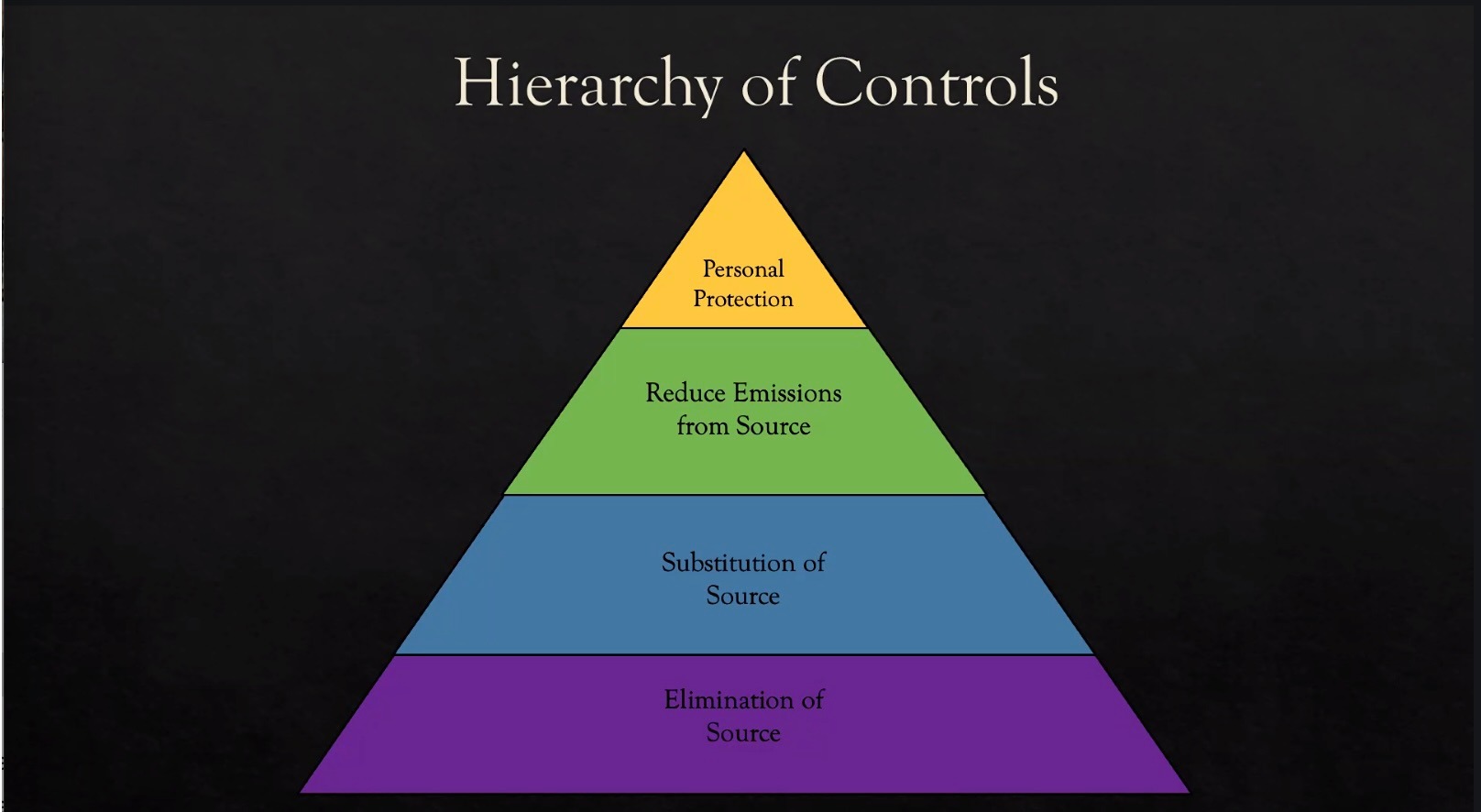
Figure 1: Hierarchy of controls to combat air pollution via “Air Pollution Research to Inform Public Health Policy and Action” by Dr. Sara Adar
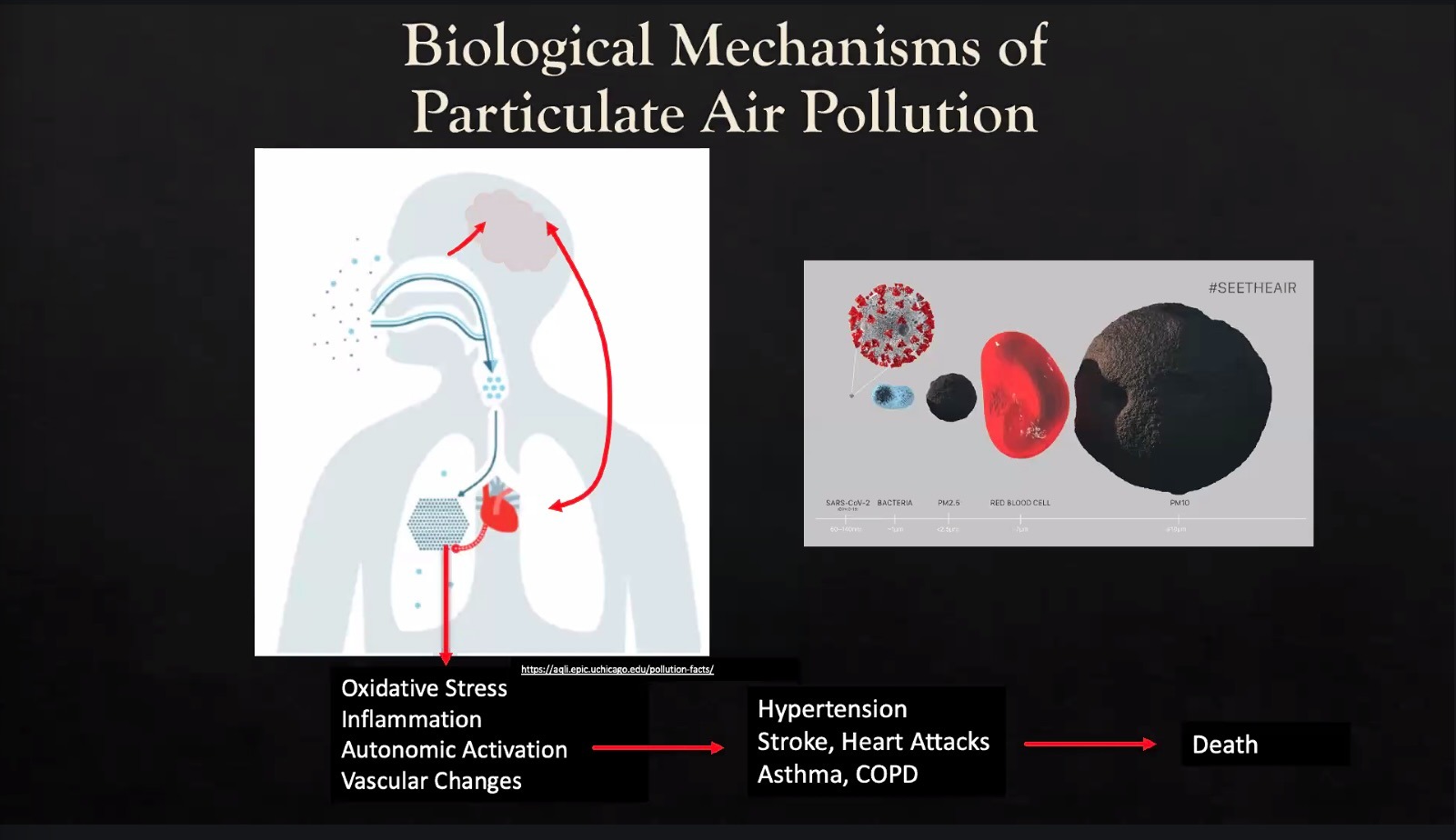
Figure 2: Mechanism of particulate air pollution via “Air Pollution Research to Inform Public Health Policy and Action” by Dr. Sara Adar

