BY KIERSTIN GEHRES
When Dr. Rosana Edward entered a hospital in Haiti in 2010, she was met with a harrowing sight: patients lay across the floor, reaching out to her and grasping at her feet as they begged, “Help me. Please, help me.”1 This tragedy unfolded after the United Nations (UN) introduced a deadly, highly transmissible disease into Haiti, claiming the lives of more than 9,000 people. Yet this was not an isolated failure: in the Democratic Republic of Congo, UN peacekeepers have likewise been accused of sexually exploiting the very individuals they were entrusted to protect. While these incidents happened in different countries and continents, they represent a wider pattern of human rights violations within the UN. According to the UN, “The term ‘human rights’ was mentioned seven times in the UN’s founding charter, making the promotion and protection of human rights a key purpose and guiding principle of the Organization.”2 Despite its mission to uphold human rights, the UN has actively undermined the right to life and an adequate standard of living on multiple occasions, leaving lasting public health and social scars on vulnerable communities around the globe. Case studies of UN involvement in Haiti and the Democratic Republic of Congo exemplify UN abuse and the lack of accountability for the harm directly caused by this organization.
As a result of the UN Stabilization Mission in Haiti (or MINUSTAH, spanning from June 2004 to October 2017), the UN has directly endangered the public health of the 11 million citizens of Haiti.3,4 MINUSTAH brought UN Peacekeepers to Haiti after the Haitian President, Jean-Bertrand Aristide, left the country after the outbreak of armed conflicts in many of the nation’s cities. Additionally, a 2010 earthquake killed over 220,000 people, increasing the country’s political and economic uncertainty. The UN itself states that the mission of MINUSTAH was to “restore a secure and stable environment, to promote the political process, [and] to strengthen Haiti’s Government institutions and rule-of-law-structures, as well as to promote and to protect human rights.”4
Given the UN’s mission to promote peace and stability, it is deeply ironic that it further destabilized Haiti by introducing cholera, triggering a nationwide outbreak. This catastrophe resulted from the UN’s negligent oversight and has inflicted immense suffering on hundreds of thousands of Haitians. The disease was brought to Haiti by UN Peacekeepers from Nepal. Cholera is endemic to Nepal, and an outbreak of the disease occurred right before peacekeepers were transferred from Nepal to Haiti in October 2010. Not only were these peacekeepers already at risk of carrying disease, but they were also placed in a critical location in Haiti. Peacekeepers were stationed in Méyè, a town 40 kilometers north of the capital, Port-au-Prince. Their base had direct access to a tributary of the largest river in Haiti, the Artibonite. Because of this, the cholera infected peacekeepers contaminated one of the largest water sources in the country. Contamination was facilitated by the lack of care put into the construction and sanitation of the Méyè base, resulting in sewage entering the tributary. Cholera is spread by consuming contaminated water, and therefore, this action posed a major public health issue for Haiti. Within two weeks of the Peacekeepers arrival, cholera infections were reported downstream of the base and had spread through Central Haiti.5 The UN had officially started a cholera epidemic.
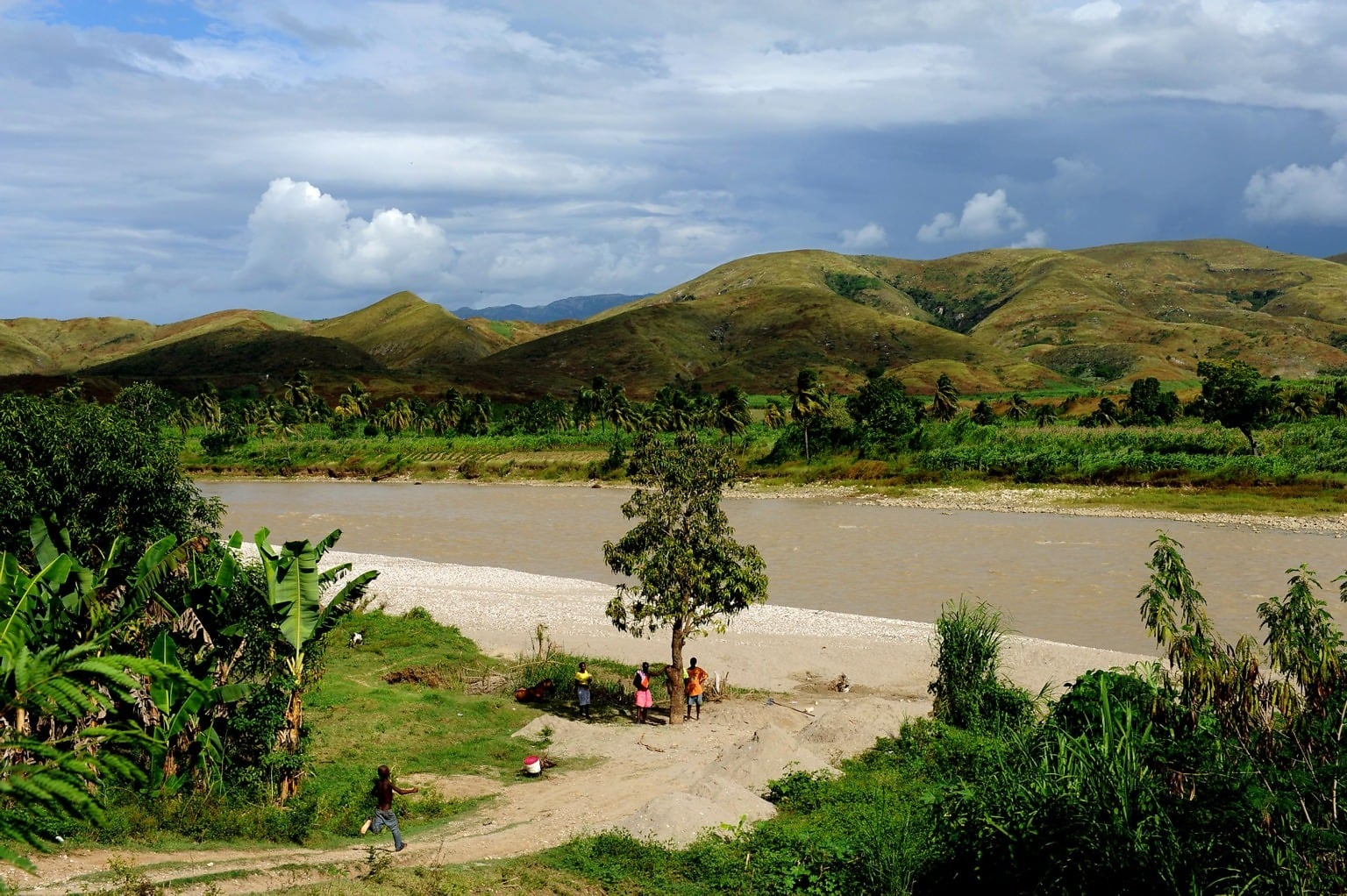
The Artibonite River, the suspected source of the Haiti Cholera Outbreak6
Throughout the duration of the epidemic, 800,000 individuals were infected and 9,000 were killed.5 Given the highly contagious nature of cholera, new infections occurred in Haiti for a decade after the outbreak.4 After three years of the absence of cholera, the disease had reemerged in Haiti. As of September 23, 2025, cholera cases are still reported in Haiti’s capital.7
With this epidemic serving as clear evidence of the UN’s carelessness, one would think that the UN would swiftly act to mitigate the harm they caused, or at least acknowledge their wrongdoing. However, this is not the case. For years after the outbreak, the UN refused to take responsibility for causing the epidemic and in 2013, invoked the Convention on Privileges and Immunities of the United Nations to dismiss victims’ claims of the harm they caused.5
This lack of accountability persisted for years, until an official apology statement was released by UN Secretary General, Ban Ki-moon in 2016. Part of the statement is as follows:
“The United Nations deeply regrets the loss of life and suffering caused by the cholera outbreak in Haiti. On behalf of the United Nations, I want to say very clearly: we apologise to the Haitian people. We simply did not do enough with regard to the cholera outbreak and its spread in Haiti. We are profoundly sorry for our role. This has cast a shadow upon the relationship between the United Nations and the people of Haiti. It is a blemish on the reputation of UN peacekeeping and the Organization world-wide. For the sake of the Haitian people, but also for the sake of the United Nations itself, we have a moral responsibility to act. And we have a collective responsibility to deliver.”7
While this statement may be an apology for some actions, it appears that it doesn’t clearly acknowledge that the U.N. is responsible for the cholera epidemic. Stating that they “simply did not do enough” seems to create no impression of causation, and undermines the UN’s active responsibility in causing over 9,000 deaths. With the statement’s mention of reputation, it is clear that the UN crafted this statement to appear to take accountability in order to save their public image, without actually divulging the truth and genuinely apologizing. For an organization who claims to be dedicated to upholding human rights, they did not fulfill this ideal. The UN violated the Haitians’ human right to life through causing the cholera epidemic, and deepened the pain they caused with a shallow apology.
Haiti isn’t the only country that has been affected by the UN’s negligence. The Democratic Republic of Congo (DR Congo) has also suffered at the hands of Peacekeepers during the UN Organization Stabilization Mission in the Democratic Republic of the Congo (MONUSCO). MONUSCO started from previous UN involvement in the DR Congo, and was established to promote peace after new presidential elections and war.8 The mission started in July 2010, and is still ongoing as of October 2025. According to the United Nations, “The new mission has been authorized to use all necessary means to carry out its mandate relating, among other things, to the protection of civilians, humanitarian personnel and human rights defenders under imminent threat of physical violence and to support the Government of the DRC in its stabilization and peace consolidation efforts.”9
Despite the mission to promote peace and mitigate the threat of physical violence, in actuality, the UN has directly introduced physical violence to DR Congo. In fact, 36.4% of all sexual exploitation and abuse reports the UN has received are from the DR Congo. Specifically, 398 allegations against UN associates in DR Congo have been made from 2007 to July 2025.10 Evidently, these incidents are not isolated and represent a larger pattern of behavior plaguing the UN. This sexual violence is believed to be associated with the large amount of UN support brought into the DR Congo, and the prevalent poverty DR Congo citizens face. With over 20,000 UN personnel and UN Peacekeepers receiving a salary 500 to 1000 times greater than the average worker of the DR Congo,10 it is not surprising that large power imbalances created an environment convenient for exploitation.
Like the cholera outbreak in Haiti, the UN did little to take real responsibility and solve the problems they caused in DR Congo. In 2003, the UN Secretary General, Kofi Annan, issued a zero-tolerance policy for all peacekeepers that prohibited sexual exploitation, engaging in transactional sexual acts, and explicit interactions with children.11 Even with this policy, sexual violence continued to be frequently reported in DR Congo. This highlights a clear failure in the UN’s ability to deal with such sexual abuse problems. In 2005, two incidents where the zero-tolerance policy was breached or not followed were investigated by the UN.12 Combined with breaches of the zero-tolerance policy, the UN also has an inability to prosecute peacekeepers who engage in sexual exploitation. This failure to obtain justice stems from peacekeepers’ immunity in the countries they work in. While the UN Secretary General can waive immunity which subjects peacekeepers to the local law, this is practically useless. Given that UN missions take place in countries with flawed judicial systems, waiving immunity would likely result in no justice. Peacekeepers can also be extradited to their home countries for trial, but there, victims are far and convictions often fail.13
In addition to this lack of justice, the World Health Organization (WHO), an offshoot of the UN, gave only $250 to 104 victims of sexual abuse by peacekeepers in DR Congo.14 While this financial support demonstrates some accountability being taken, it is important to note that $250 is less than a one day expense for U.N. Peacekeepers in DR Congo’s capital.14 This monetary amount is particularly inadequate when the effects of such assaults are considered. Children resulting from sexual violence by peacekeepers bring financial burdens to already impoverished individuals. According to a WHO Doctor, Gaya Gamhewage, who travelled to DR Congo to meet with victims, one of the abused women she met gave birth to a baby with “a malformation that required special medical treatment,” resulting in yet more costs for the mother in one of the poorest countries in the world.14 As peacekeepers have left the country, the children will grow up impoverished and without their father, violating their human right to adequate living standards and leaving long-lasting social and emotional scars on children and their mothers.
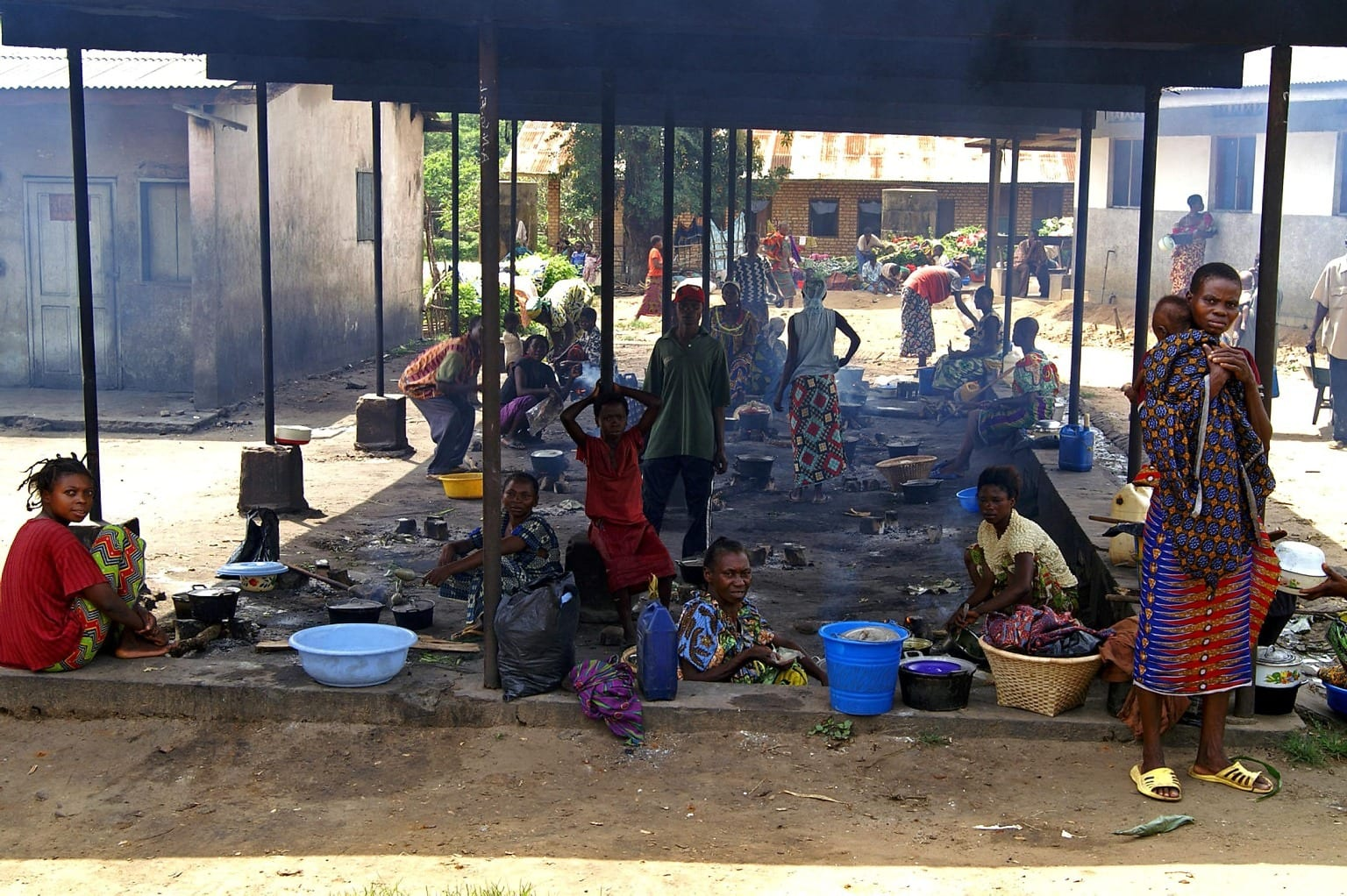
Women and Children prepare meals in DR Congo.15
Evidently, the UN has serious problems involving human rights violations in countries they are supposed to be assisting. Those in the afflicted countries are aware of this. Specifically, a citizen of the DR Congo feels that “MONUSCO white men are here for destroying by the fact that they are impregnating our young ladies and abandoning them.”16 Moreover, the UN often refuses to take accountability for these actions, which harms victims and leaves scars on the affected individuals and communities. Thus, revising peacekeeper immunity policies would prevent the UN from continuing to evade accountability, helping to bring an end to these injustices. Additionally, all countries involved in the UN need to advocate for justice for the violated communities.
It is our collective moral duty to defend human rights. When we turn a blind eye to one violation, we open the door to countless others. The erosion of human dignity anywhere threatens humanity everywhere, and it must end now.
——————————
Works Cited
- BBC News. Haiti cholera epidemic ‘most likely’ started at UN camp – top scientist. BBC News (2012).
- United Nations. Protect human rights. United Nations https://www.un.org/en/our-work/protect-human-rights (2025).
- World Bank. World Bank Open Data. World Bank https://data.worldbank.org (2025).
- United Nations Peacekeeping. MINUSTAH. United Nations https://peacekeeping.un.org/en/mission/minustah (2025).
- Yale Law School International Human Rights Clinic. Peacekeeping Without Accountability: The United Nations’ Responsibility for the Haitian Cholera Epidemic (Yale Law School, 2013).
- iStock. Haiti river stock photos, pictures & royalty-free images. iStock https://www.istockphoto.com/photos/haiti-river (2025).
- United Nations. Secretary-General apologizes for United Nations role in Haiti cholera epidemic, urges international funding of new response to disease. United Nations https://press.un.org/en/2016/sgsm18323.doc.htm (2016).
- MONUSCO. Background. United Nations http://monusco.unmissions.org/en/background (2016).
- United Nations Peacekeeping. MONUSCO. United Nations https://peacekeeping.un.org/en/mission/monusco (2025).
- Gray, S., Lusamba, S., Stuart, H., Lee, S. & Bartels, S. A. ‘They were just enjoying love and she was making money’: a qualitative analysis of UN peacekeeper sexual interactions in the Democratic Republic of Congo. Confl. Health 19, 51 (2025).
- United Nations. United Nations Peacekeeping Force in Cyprus (UNFICYP): sexual exploitation and abuse information sheet. United Nations https://unficyp.unmissions.org/sites/default/files/sea_information_sheet_for_unficyp_website_-_2018_1.pdf (2018).
- UN News. UN mission probes possible breaches of zero-tolerance policy on sexual exploitation. United Nations https://news.un.org/en/story/2005/04/134712 (2005).
- International Bar Association. Global: ending impunity for crimes committed by UN peacekeepers. International Bar Association https://www.ibanet.org/article/cebc5f69-a238-49bb-b85a-5e8d878fe485 (2025).
- Associated Press. Internal documents show the World Health Organization paid sexual abuse victims in Congo $250 each. Voice of America https://www.voanews.com/a/internal-documents-show-the-world-health-organization-paid-sexual-abuse-victims-in-congo-250-each/7354013.html (2023).
- Pixnio. Women and children prepare meals, Congo, Africa. Pixnio https://pixnio.com/people/crowd/women-and-children-prepare-meals-congo-africa (2025).
- Fraulin, G., Lee, S., Lusamba, S. & Bartels, S. A. “It was with my consent since he was providing me with money”: a mixed methods study of adolescent perspectives on peacekeeper-perpetrated sexual exploitation and abuse in the Democratic Republic of Congo. Confl. Health15, 80 (2021).

