BY SYDNEY KIM
Many people have heard the phrase, “that is so gay.” Although it is sometimes dismissed as a harmless joke, it reflects another unconscious way of perpetuating discrimination and outdated societal views from a time when being queer meant being “othered” and seen as unfavorable. During the 1970s and 1980s, the burgeoning modern LGBTQ+ rights movement, initiated by the 1969 Stonewall riots, a rebellion triggered by a police raid of a New York gay bar, made queer communities more prominent in the public eye, but also intensified the exclusion and prejudice.
Activists worked to combat the relentless hostility and ignorant discrimination of LGBTQ+ people to secure their basic human rights. For LGBTQ+ individuals, human rights are not abstract ideals; they represent the ability to openly express one’s identity, build safe, lifelong relationships, and live free from violence and oppression. However, these fundamental rights remained elusive for many LGBTQ+ people in the past. LGBTQ+ people were denied their rights in the 1970s and 1980s by being subjected to hateful violence and ignored during the AIDs crisis. However, the conditions have improved in the 21st century because of new federal rulings that protect LGBTQ+ rights.
In the 1970s and 1980s, the LGBTQ+ community suffered widespread violence due to societal standards that alienated non-heteronormative people. LGBTQ+ people were excluded from many social settings, making gay bars a “safe” social outlet for those in the community. However, these gay bars were frequently targeted for hate crimes. Following the 1969 Stonewall riots, the 1973 Upstairs Lounge became one of the largest massacres of people in US history until 2016. An unknown arsonist caused the Upstairs Lounge fire: thirty-two people died, and fifteen people were injured. Neither national leaders nor local officials condemned the attack or issued condolences.
In a private memorial service, LGBTQ+ activist Reverend James Sandmire spoke about the attack and said, “Those who died in the New Orleans fire were simply eating and drinking together in a spirit of fellowship. They were people relating to one another.”5 In the same memorial service, Sandmire emphasized the general media’s response to the lounge fire, which included insensitive news reports, displaying prevalent societal attitudes towards people who did not conform to societal standards. Basic human rights, which include the right to pursue happiness, were denied to those who lost their lives and to the LGBTQ+ community that grieved in silence.
Beyond large-scale attacks, everyday life and activities such as grocery shopping also pose constant danger for LGBTQ+ individuals. For example, Matthew Holloway, a homosexual man, recalls an incident where he was picking up his roommate from the supermarket, and a man and a woman attacked him, resulting in “three broken ribs, a broken jaw, and bruises” yet “no suspects were arrested.”3
LGBTQ+ people were denied the foundations of a secure life and could not fully embrace their identity out of fear of openly being a part of the queer community. LGBTQ+ individuals were also denied human rights because of fears and prejudices against gay and bisexual men, fueled by the AIDS epidemic. Human Immunodeficiency Virus (HIV) is a virus that attacks the body’s immune system and, left untreated, can lead to Acquired Immunodeficiency Syndrome (AIDS).
The AIDS epidemic in the U.S. began in 1981, primarily affecting homosexuals, intravenous drug users, and Black and Latinx communities. Later research revealed that the disease could be transmitted through unprotected sex, blood, or breastmilk. Initial investigations were not prioritized due to prejudices against these populations. Dr. Alvin Friedman-Kien explained that “the attitude was, these (diseases) are only in gays and IV drug users, underdogs, people who didn’t deserve any special attention.”4
During the AIDS crisis, “most theories of the genesis of AIDS had moral overtones and implications which [found] fault and assess[ed] blame…The sentiment asserted by thousands of Americans that people with AIDS are ‘getting what they deserve.’”1 People wanted to blame the LGBTQ+ community for the epidemic, which not only dehumanizes the people suffering from AIDS but also displays society’s failure to empathize with marginalized groups, particularly the LGBTQ+ community. The general public began to fear LGBTQ+ people with AIDS, and the belief that the disease was a result of moral failings and divine retribution justified inaction toward those suffering. Societal attitudes played a crucial role in hindering progress toward understanding and treating AIDS, as well as excluding the LGBTQ+ community from the basic protections of human rights; their struggle and suffering were magnified by societal stigma and neglect.
In the 21st century, legislation such as the Equality Act and the landmark Obergefell v. Hodges decision have helped protect the human rights of LGBTQ+ people by ensuring equality and recognition. Jim Obergefell filed a suit in the U.S. District Court for the Southern District of Ohio to recognize gay marriage performed out of state. The case later went to the Supreme Court, and on June 26, 2015, the Court held that gay couples possessed the constitutional right to marry.
The decision not only extended the right to marry to same-sex couples nationwide but also validated their relationships as equal to heterosexual relationships. The ruling overturned longstanding prejudices and legal inequalities and reduced the stigma and secrecy once associated with same-sex marriage. People in non-heteronormative relationships could declare themselves married without fearing repercussions. In addition, the Equality Act, passed in 2021, was a monumental shift in the legal landscape for LGBTQ+ individuals in America. It reads:
“This bill prohibits discrimination based on sex, sexual orientation, and gender identity in areas including public accommodations and facilities, education, federal funding, employment, housing, credit, and the jury system.”
This legislation acknowledges and actively protects LGBTQ+ people’s rights across a broad spectrum of daily life. By legally safeguarding against discrimination in critical areas such as employment, housing, and education, the act dismantles many of the institutional barriers that previously hindered LGBTQ+ individuals from fully participating in and benefiting from societal opportunities. Both laws clearly indicate societal progress, reflecting a growing recognition and acceptance of LGBTQ+ rights as human rights.
In the 1970s and 1980s, LGBTQ+ people were denied basic rights through targeted violence and a lack of support during the AIDS crisis, but 21st-century federal rulings have improved LGBTQ+ lives by affirming their dignity and rights.
Legislation is a significant step forward because legality tends to inform the public’s opinion on morality, and it legitimizes LGBTQ+ rights as fundamental human rights. Nevertheless, there is an ongoing struggle for social acceptance due to religious beliefs and cultural values. Recognizing and protecting human rights for all people is essential to creating an inclusive society, and the best way to build this understanding is through open conversations and a willingness to learn from those different from ourselves. Although legal equality has advanced, achieving full social acceptance requires continued education, empathy, and advocacy.
Figure 1. Protest of the Religious Discrimination Bill by LGBTQI+ Activists in Sydney, Australia (Feb 12, 2022). Image courtesy of Nikolas Gannon. https://unsplash.com/photos/a-group-of-people-walking-down-a-street-holding-a-banner-43b5JNIKsDk
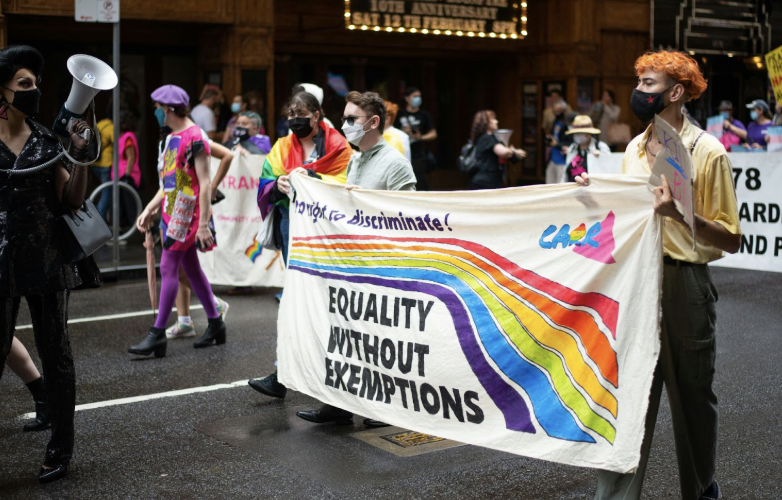
Figure 2. London Pride Parade in 2016. Image courtesy of Ian Taylor. https://unsplash.com/photos/people-holding-happy-birthday-banner-Qp2Oo15HLzA

——————————
References
- Dunlap, M. C. AIDS and discrimination in the United States: reflections on the nature of prejudice in a virus. Vill. L. Rev. 34, 909 (1989). https://digitalcommons.law.villanova.edu/cgi/viewcontent.cgi?article=2657&context=vlr
- Editors, Biography.com. Harvey Milk – movie, death & quotes. A&E Television Networks (2014). www.biography.com/political-figures/harvey-milk
- Greer, W. R. Violence against homosexuals rising, groups seeking wider protection say. The New York Times (23 Nov. 1986). https://www.nytimes.com/1986/11/23/us/violence-against-homosexuals-rising-groups-seeking-wider-protection-say.html
- Landau, E. HIV in the ’80s: people didn’t want to kiss you on the cheek. CNN (25 May 2011). www.cnn.com/2011/HEALTH/05/25/edmund.white.hiv.aids/index.html
- St. John, M. Account of memorials in many cities. The Advocate 1, 15–16 (1973). https://exhibits.lgbtran.org/items/show/103 (accessed 7 Oct 2025).
- Congress.gov. Text – H.R.5 – 117th Congress (2021–2022): Equality Act. Library of Congress (17 Mar 2021). https://www.congress.gov/bill/117th-congress/house-bill/5/text
- Vanderbilt University Law School. Civil rights activist Jim Obergefell tells the story of his fight to legalize gay marriage. Vanderbilt University Law School (18 Apr 2023). https://law.vanderbilt.edu/civil-rights-activist-jim-obergefell-tells-the-story-of-his-fight-to-legalize-gay-marriage/ (accessed 7 Oct 2025).
 Yale Global Health Review