
BY MAYEESHA ALVI
I. Introduction
Seventeen-year-old Ana lies awake at night, following episodes of insomnia and recurring nightmares. Panic attacks take hold of her entire body and her grades begin to slip. To her clinicians, her symptoms mirror post-traumatic stress disorder (PTSD). To her family, she is simply a young daughter afraid of losing her parents.
This is the reality of many adolescents like Ana: a U.S. born citizen to undocumented immigrants. After her father witnessed an Immigration and Customs Enforcement (ICE) raid at his workplace, Ana’s sense of security crumbled—not for her own safety, but for that of her family, who had fled political violence during El Salvador’s civil war.1
Ana’s story is one of many that reveal an overlooked reality in United States politics: brutal immigration enforcement does not merely secure national borders—it fractures childhoods, destabilizes families, and systemically undermines the mental health of the very communities that sustain the nation.
II. Policy Context
The United States is home to the largest migrant population in the world, with a record number of more than 50 million immigrants.2 Each person has a unique path into the country, whether via student or skilled worker visas, or by seeking asylum from poverty or violence. Immigration contributes an immense amount to the host country, bringing in diverse skill sets, vibrant cultures, and methods of economic innovation and productivity.3
Despite these benefits, the country has been witnessing an increasing number of publicized crackdowns, inciting fear in Americans. Since the beginning of the second Trump administration in January 2025, the government has passed a series of executive orders that have exacerbated fear among immigrant communities like the suspension of the U.S. Refugee Admissions Program (USRAP) and the reinstatement of the “Remain in Mexico” policy, which mandates asylum seekers to await U.S. court dates outside of the U.S.4 Most notably, Donald Trump signed the “Big Beautiful Bill” into law on July 4, 2025, “which included $150 billion for immigration enforcement and border security.”1
III. Mental Health Impacts
While framed as matters of national sovereignty and protection, these policies reverberate in quieter, more insidious ways. Restrictive immigration measures have been directly associated with adverse mental health conditions such as depression, anxiety, PTSD, and substance use among undocumented populations. Conditions such as prolonged detention only exacerbate these outcomes. In 2003, the Physicians for Human Rights and the Bellevue/NYU Program for Survivors of Torture reported that among detained asylum seekers, 86% experienced depression, 77% reported anxiety, and 50% exhibited symptoms of PTSD.5 More than two decades later, these patterns have continued to persist and intensify.
A 2024 study expressed that migrants live in a constant “state of limbo” due to insecure immigration status and the ongoing threat of deportation. This has shown to be a chronic psychological stressor, with many facets including fears of social isolation, stigmatization, and uncertainty about the future, as opposed to a one-time occurring event.5
The expansion of policies that allow for expedited removals escalates these fears, psychologically traumatizing entire families. What is even more troubling is that the repercussions of immigration enforcement do not wait for adulthood. Adolescents with detained or deported family members within the past year exhibited “higher odds of suicidal ideation, alcohol use, and clinical externalising behaviours.”6 Like Ana’s case, many children and young adults carry the distress of “what if”—what if my family gets deported, what if we get seperated, what if they leave without me? These fears take a measurable psychological toll: U.S.-born children of deported or detained parents exhibit significantly higher rates of PTSD than children whose parents are legal permanent residents or undocumented but have had no prior contact with immigration enforcement.4
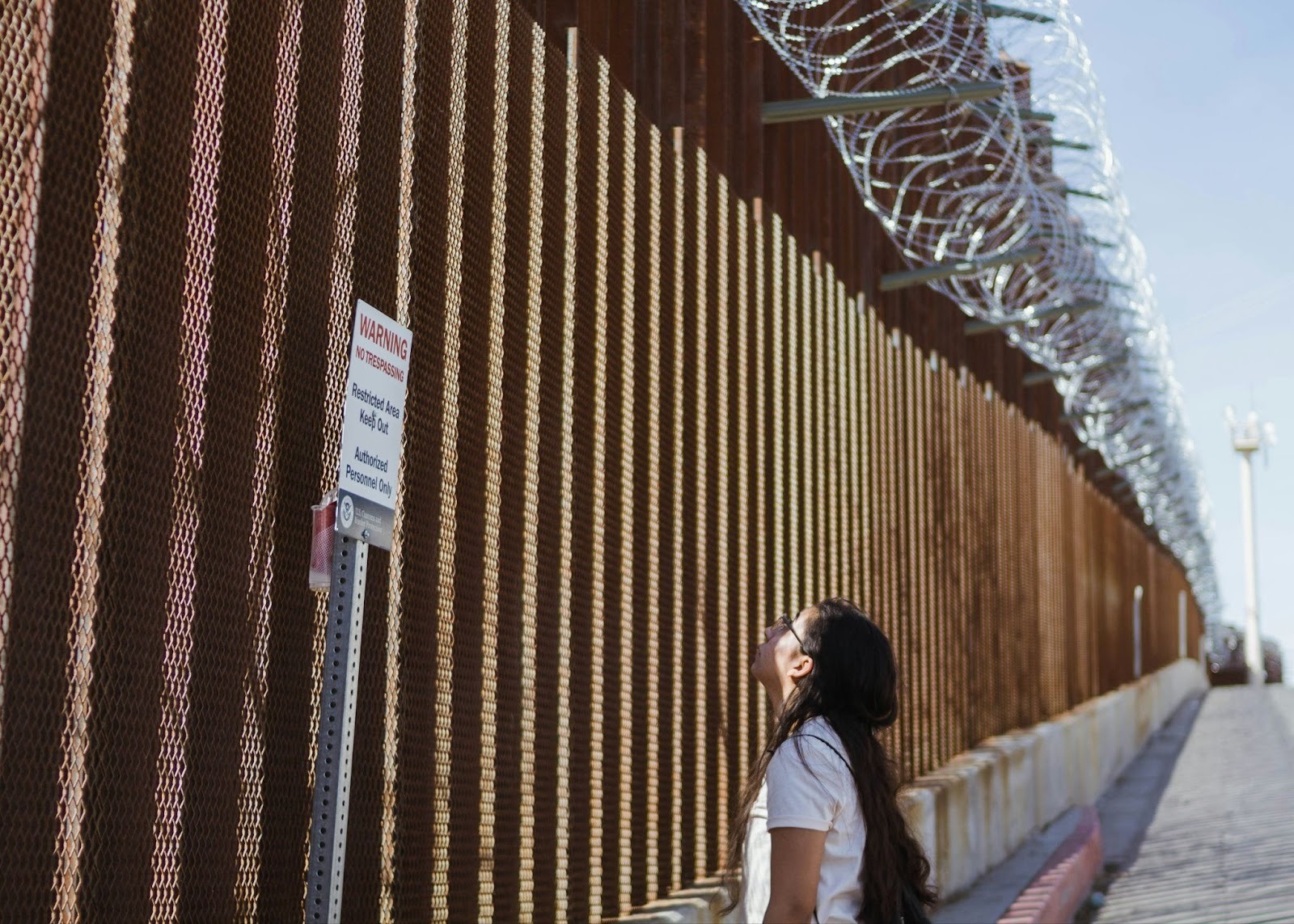
Border wall divides the town of Nogales in two. This photo was taken on the U.S. side of the border., Annika Gordon – Unsplash
V. Broader Implications
Beyond politics, the true costs of violent immigration enforcement reach far beyond a single family. Once considered “sensitive locations,” healthcare facilities, schools, and places of worship have lost that protected status, leaving undocumented communities increasingly cut off from vital sources of information, support, and care. Federally qualified health centers provide lifesaving treatment regardless of immigration status; schools ensure vaccination schedules, nutritious meals, and mental health services; and faith-based organizations often operate food banks, provide shelter, and offer spiritual guidance. When immigration enforcement enters these spaces of supposed refuge, it fractures the fragile networks that uphold community health and trust, leaving countless individuals neglected and unsupported.6
Children of mixed-status families are particularly vulnerable to these systemic disruptions. During periods of heightened immigration restriction, participation in public benefit programs such as Medicaid and the Children’s Health Insurance Program (CHIP) declines sharply among immigrant households. Children depend on their parents’ eligibility and willingness to engage with these systems. Reduced access to health coverage and public services has been linked to higher rates of food insecurity, poorer health outcomes, and increased childhood poverty among these families.6 Increased police presence and immigration enforcement also results in “decreased mobility for undocumented immigrants, disruptions in employment opportunities and social support relationships, and limited access to public services.”5
Parents fearing separation may also keep their children out of school, hindering opportunities for these communities more broadly, and influencing family dynamics. Dr. Maryam Rafieifar from the University of Texas at Arlington School of Social Work found that some parents expressed fears of their children reporting their immigration status to authorities after disagreements. Additionally, in familial instances in which siblings are of mixed citizenship status, the citizen sibling may access higher education and government support, while the other does not, “[placing] heavy expectations and feelings of guilt on the citizen child.”3 Furthermore, when a parent is detained or deported, the remaining family members are forced to choose between working and staying home, “jeopardizing access to basic needs like food and housing … affecting school performance and engagement across public sectors.”4
This mental health burden only perpetuates existing healthcare inequities in marginalized populations. Due to fear of deportation, many immigrants avoid seeking mental health help, only exacerbating their conditions. The psychological damage of migration-related stress is most evident in communities where the most mental health barriers persist, creating a generational cycle of delayed interventions and adverse mental health outcomes.4
VI. Call to Action
Immigration remains one of the most contentious issues in the United States, yet few solutions address the healthcare rights of migrants. Until government reform tackles the root causes of restrictive immigration policy, the mental health sector must work proactively to provide culturally competent care to communities targeted by these repressive and destabilizing systems. Solutions must be nuanced and adaptive—ranging from increasing the number of culturally competent practitioners to reshaping the broader public narrative around migrants. Without a community response, these communities will continue to fall victim to generational mental health struggles.
Mental health struggles transcend nationality, yet the cultural contexts in which they emerge are deeply personal. In marginalized communities, stigma surrounding mental illness often prevents individuals from seeking help for fear of judgment or ostracization. These barriers are compounded by the lack of racial and ethnic diversity in the psychological workforce. A 2021 report from the Agency for Healthcare Research and Quality found that racially and ethnically minoritized populations comprise nearly 40 percent of the U.S. population but only one-sixth of all practicing psychologists. This disparity perpetuates limited cultural understanding and reinforces “racist systems, practices, ideologies, and beliefs that have resulted in harm for communities of color.” The result is widespread mistrust of mental health institutions and reduced help-seeking behaviors among those who need care most. Undoubtedly, cost, lack of insurance, and the complex healthcare system of America continue to be additional hurdles in immigrant mental health in the United States.7
Clinically, health professionals should have an integrative understanding of the diverse identities of those they serve. For example, the Latinx Therapists Action Network utilizes elements of traditional medicine and cultural terms in order to make patients feel more familiar and comfortable handling their mental health, alongside their upbringings.4 Increasing diversity within the psychological field can foster a sense of community and understanding, allowing for increased help-seeking behaviors among vulnerable populations. In practice, this may involve engaging caregivers in therapeutic work, particularly within families experiencing intergenerational trauma, to help reframe mental health systems and reduce stigma across generations.5
At the policy level, implementing trauma-informed care and mandatory mental health screenings in detention centers could ensure psychological support during acute crises. Expanding community-based programs that provide both legal and mental health services can further alleviate the chronic stress tied to immigration uncertainty.4 Reform that prioritizes family unity and psychological well-being would not only protect vulnerable populations but also strengthen the nation’s moral and public health foundations.

Immigrants make America Great, Nitish Meena – Unsplash
VII. Conclusion
America once prided itself on being a refuge for those fleeing violence in search of safety, opportunity, and health. Yet for many migrants today, especially children like Ana, that promise has eroded into fear, instability, and systemic neglect. When government policies inflict psychological harm, the responsibility falls on healthcare professionals, policymakers, advocates, and citizens alike to reaffirm the nation’s moral commitment to compassion and care for all.
The mental health of migrants is not an isolated concern—it is a generational issue that shapes the well-being of entire communities. National security may be a legitimate priority, but when it comes at the expense of humanity, the nation must redefine its proclaimed missions. Protecting the nation must include protecting the people within it. Addressing the multifaceted trauma and marginalization faced by migrant populations demands culturally competent mental health care, policies grounded in empathy, and a renewed understanding that protecting human rights is inseparable from protecting mental health.
——————————
References
- Fortuna, L. Special report: U.S. immigration policy and the mental health of children and families. Psychiatr. News (2025). https://psychiatryonline.org/doi/10.1176/appi.pn.2025.08.8.19
- Kramer, S. & Passel, J. What the data says about immigrants in the U.S. Pew Research Center https://www.pewresearch.org/short-reads/2025/08/21/key-findings-about-us-immigrants/ (2025).
- Valero, M. V. U.S. immigration policy: Mental health impacts of increased detentions and deportations. American Psychological Association https://www.apa.org/monitor/2025/09/mental-health-immigration-enforcement (2025).
- Dadras, O. & Hazratzai, M. S. The silent trauma: U.S. immigration policies and mental health. Lancet Reg. Health https://pmc.ncbi.nlm.nih.gov/articles/PMC11914743/ (2025).
- Rogers, R. The dire mental health effects of restrictive immigration policies. U.S. Committee for Refugees and Immigrants https://refugees.org/the-dire-mental-health-effects-of-restrictive-immigration-policies/ (2025).
- Lacarte, V. The health costs to children of stepped-up U.S. immigration enforcement. Migration Policy Institute https://www.migrationpolicy.org/news/health-costs-immigration-enforcement (2025).
- Lyra Health. Culturally responsive care in mental health. Lyra Healthhttps://www.lyrahealth.com/resources/culturally-responsive-care/ (2025).
 Yale Global Health Review