Throughout Deaf history, a culture was silenced through institutional repression. Now, in the 21st century, the International Week of Deaf People represents a movement that celebrates and promotes language access for all.
BY MICHELLE SO
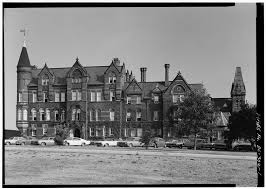
Gallaudet University in Washington, DC. Courtesy of the Library of Congress.

Caption: Renowned Deaf school Gallaudet University in Washington, DC.Courtesy of Flickr.com. Gallaudet University | Washington, DC Gallaudet is the equiv… | Flickr
Let’s imagine an alternative universe where people communicate using telepathy. People live and act all the same, only silent. Brainwaves and eye contact fill in the space where words and voice would be. But in this world, you are normal. You are not telepathic. You and a tight-knit community of other verbalites communicate using words. You speak, shout, and sing. The others could learn to use their voices if they could, but they don’t.
This is, in many ways, the reality for Deaf and hard-of-hearing people. Our oralist society insists upon conformity of ability, even when it is unfair to the parties being asked. At its root, the right to language, the right to expression, is a fundamental human right. It is a right to a way of life that, for many, is being denied. Advocacy groups and organizations are doing their part to counter this shift. Here is how.
History of Oralism
In the 1860s, Samuel Gridley Howe, a chairman of the Massachusetts Board of State Charities, pushed for the formation of a Deaf school.1 However, he argued for the school to silo Deaf students so as to extinguish their alternative culture. In the book Words Made Flesh, deaf culture historian R.A.R. Edwards writes that “Howe viewed the deaf as ‘them’ and the hearing as ‘us.’ It was to be the point of deaf education to make ‘them’ more like ‘us.’”1 Edwards continues that Howe wanted as little association between members of the Deaf community as possible. Howe described the lack of an important sense, such as hearing, “tends to give morbid growth in certain directions; as a plant checked in its direct upward growth grows askew.”1 In other words, Deafness was a weed that needed to be trimmed.
Howe’s influence was powerful, and in 1867, two schools—the Institution for the Improved Instruction of Deaf-Mutes (now the Lexington School for the Deaf) in New York City and the Clarke Institution for Deaf-Mutes—were founded on the principle of “oralism.”2 Deaf students were enrolled on the basis that they would master lipreading and learn to speak. And one major problem: they couldn’t hear the words coming from their own mouths.
The complexities and visible struggles were captured in a comprehensive survey study in 1979 which attempted to capture this divide.3 The researchers asked Deaf oralist students from Clarke School for the Deaf, Central Institute for the Deaf, and St. Joseph’s Institute for the Deaf what challenges they faced being oral Deaf—one who speaks without hearing. Their answers included “People have difficulty in understanding my speech,” “Self-conscious about my speech and voice,” “Feelings of isolation resulting from not fitting into either ‘hearing’ nor ‘deaf’ worlds.” These concerns were echoed by the fact that oral Deaf students were expected to receive communication by lip-reading—an expectation that presented its own struggles, as mouth shape varies from individual, making certain people more difficult to lip-read and understand.4
In an article in the Daily Hampshire Gazette, historian Brian Greenwald said Deaf people invented their own signs and used them on the sly, creating their own organizations and continuing to marry within Deaf circles, isolating and dispersing their culture.5 Oralism was gradually relied on less and is still a topic of debate today. But, throughout its implementation, Deaf people remained incredibly resilient in preserving their culture and language.
International Week of Deaf People
Today, there is work being done globally to make sure sign language and language rights are provided to those who need them most. Founded by the World Federation of the Deaf, the International Week of Deaf People (IWDP) began in 1958 in Rome. IWDP became an internationally celebrated week of increased signing visibility and celebrations of Deafness. The advocacy movement also made its way to Yale; IWDP at Yale launched in 2021, bringing with it an increased awareness of the movement.
This year, IWDP 2025 celebrated the theme “Sign Language Rights are Human Rights.” To Andrew Fisher, an ASL professor at Yale, IDWP is “a reminder that Deaf people around the world share a bond that goes beyond language, even though sign languages differ from country to country.” He also wrote, “It also reminds us how far we’ve come in the fight for human rights—and how much more we can achieve by working together.”7
Within the week-long “Sign Language Rights are Human Rights,” IWDP’s daily themes included Deaf Rights Through Crisis Events and Sign Language Access Services. These sessions also focus on improving quality of life in all aspects. “Making sure Deaf patients who primarily communicate in sign language have access to qualified interpreters (ideally in person) is essential. Video interpreting can be more cost-effective, but in certain situations, like childbirth, having an interpreter physically present makes all the difference for understanding the full context,” Fisher said.7
Sign language rights are essential in everyday life, according to Fisher, wherever Deaf people encounter communication barriers. “The biggest issues come up in places where spoken language is still treated as the default, shutting Deaf people out of full participation,” Fisher said. “Think about schools or hospitals without qualified interpreters, TV shows without captions, or workplaces that don’t provide communication access.”7
With IWDP, culture and the broader Deaf community gain visibility and recognition that extends beyond celebration of Deafness and unity—it’s a call to action. Each year, the week reminds hearing and Deaf people alike that true inclusion is not achieved through awareness alone, but also through action. Systemic change through equitable access, linguistic respect, and representation in every sphere of life.
IWDP 2025, then, is not just about honoring the past or highlighting progress. It’s about imagining what’s next—a future where every Deaf child learns in their own language, where every patient is understood, and where communication is a shared human right, not a privilege.
——————————
References
- Edwards, R. The Fight over the Clarke School. in 183–204 (2012). doi:10.18574/nyu/9780814722435.003.0007.
- Oral schools form on the principle of ‘pure oralism’ | Gallaudet University. https://gallaudet.edu/museum/exhibits/history-through-deaf-eyes/language-and-identity/oral-schools-form-on-the-principle-of-pure-oralism/.
- Ogden, P. W. Experiences and Attitudes of Oral Deaf Adults Regarding Oralism. (University of Illinois at Urbana-Champaign, United States — Illinois, 1979).
- Taylor, H. Oralism in Oral Schools. American Annals of the Deaf 55, 379–385 (1910).
- Christensen, D. Clarke School: A brief history of oralism. Daily Hampshire Gazette https://gazettenet.com/2019/01/11/the-history-of-the-clarke-school-and-oralism-22277690/ (2019).
- History · Horace Mann School for the Deaf (1869-Present) · City of Boston Archives. https://cityofbostonarchives.omeka.net/exhibits/show/horace-mann-school/history.
- A. Fisher, personal communication, Oct 11, 2025.
 Yale Global Health Review