BY EVAN BOWMAN
On any given afternoon in Buenos Aires, you might stumble upon a protest: retirees demanding healthcare, or neighbors rallying to protect a public clinic. Collective action is not exceptional here; it is habitual. One April afternoon, I noticed that my seventy-year-old host mother, Vicky, hung a banner ten feet above her front door protesting the new urban housing code. The hand-painted hashtag read #MásVerdeMenosCemento: “more green, less cement.” When I asked her about it, she shrugged; of course, she had hung it. In Buenos Aires, activism is part of the architecture of daily life, and people gather not only to defend their rights but to affirm that those rights exist because they act together. That same collective spirit runs through the nation’s public health system, where care is seen not as an individual burden but as a shared social responsibility.
From Argentina’s neighborhood assemblies to Los Angeles County’s new Community Public Health Teams, community health workers demonstrate that empathy is not just a feeling but a structure for delivering care. Around the world, community health workers bridge the gap between households and health systems, yet their form reflects local histories: in Latin America, health is framed as collective and political, while in the United States it is often privatized and individual. Comparing Duggan, a town neighboring Buenos Aires, and Los Angeles shows a simple truth: without institutionalized empathy, the right to health is elusive.
The United States tends to understand health as an individual enterprise. We talk about self-care, personal responsibility, and “making healthy choices,” as if well-being were simply a matter of effort. This neoliberal framing places moral value on productivity and discipline rather than on structural determinants like housing, income, or access to care. By contrast, Argentina’s public health philosophy, rooted in the social medicine movements of the 20th century, treats health as a public good, shaped by social conditions and maintained through collective participation. Latin American social medicine differs from Western public health in that populations are defined not as sets of individuals but as collectives. Populations thus have social issues that need to be solved in order to improve health.1
Community health workers spread globally in the 1970s following the Alma-Ata Declaration on Primary Health Care, which called for health to be “by the people, for the people.”2 These workers serve as bridges between medical systems and communities, translating policy into personal contact. The model adapts to local histories: in some countries, community health workers are volunteers; in others, they’re formal state employees. In each setting, they embody empathy at scale: the belief that listening to, understanding, and fulfilling your neighbors’ needs is part of health.
Empathy, often treated as a private virtue, is also a form of social infrastructure and a measurable determinant of well-being. Psychological and public health research shows that empathetic societies experience stronger social cohesion, lower violence, and greater cooperation.3,4 In public health, empathy motivates action. It drives individuals to check on neighbors, nurses to return to understaffed clinics, and communities to organize for clean water. “Active empathy” transforms compassion into a social mechanism, turning care into policy and participation into prevention.
In the small town of Duggan, a few hours outside Buenos Aires, empathy has taken cartographic form. Inside the only clinic in town, the Unidad Sanitaria, a wall-sized map marks every home with colored pins. Each color represents a kind of vulnerability: red for diabetes, blue for social isolation, and yellow for domestic violence risk. Argentina’s community health workers are called sanitary workers, and they are regular people who volunteer for health training to serve their neighbors. They use this map to plan their door-to-door visits, during which they check in on neighbors, deliver educational materials and medicines, schedule vaccine visits with nurses, and help residents navigate the public health system. “We all know each other here. If someone needs help, someone goes,” said a sanitary worker in Duggan. Duggan’s model is simple but radical: it locates health in relationships, not in institutions. While Duggan’s scale is small, its ethos of care echoes across borders.
The sanitary workers of Duggan embody active empathy. They don’t wait for patients to arrive; they go to them. Many have no formal medical training, yet they recognize suffering others might overlook: an empty refrigerator, a neighbor missing from church, a bruise that doesn’t match the story. Their work blurs the line between social service and kinship, showing that empathy is not just feeling another’s pain but assuming responsibility for it.
Argentina’s public system, however, is under strain. More than half the population now lives below the poverty line, and ongoing austerity measures threaten public funding.5 The election of right-wing President Javier Milei has brought deep cuts to social services, including health programs that sustain rural clinics like Duggan’s. Even a society steeped in collective identity must contend with political forces that privatize care and weaken the infrastructure of empathy. The right to health, once central to Argentina’s national narrative, now depends on the persistence of local networks willing to fill the gaps.
Across the hemisphere, Los Angeles County has begun a similar experiment in community-based empathy. The Community Public Health Teams were created in the wake of the COVID-19 pandemic to reach residents who had long been underserved by the health system: undocumented families, unhoused individuals, and isolated elders.6 These teams of community health workers, in partnership with the County Department of Public Health and healthcare partner organizations, map neighborhoods, conduct door-to-door outreach, and connect households to resources. Most community health workers live where they serve, bringing lived experience and local knowledge to every encounter.
Tiffany Romo, director of the community engagement unit at LA County Public Health, explains that the community health workers’ “ability to balance empathy and advocacy, honesty and transparency, and creativity and strategic thinking really set the tone for the CPHT program. It allowed the teams to earn trust, strengthen relationships, and ultimately shape a model of public health that reflects community voices while also navigating the realities of institutional systems.”
Like Duggan’s sanitary workers, community health workers in Los Angeles effectively translate empathy into a structured practice. Their work demonstrates that even large, bureaucratic systems can act with care when designed to listen. This approach reflects Argentina’s social medicine ethos: health as a shared endeavor, not a service delivered from above. However, as with the Unidad Sanitaria in Duggan, the survival of these teams depends on funding cycles and political continuity. While institutionalized empathy can be powerful, it is also fragile. It depends on both community trust and governmental commitment, leaving the program’s future uncertain. When budgets are tightened, empathy—because it is not as easily quantifiable as efficiency—often becomes the first casualty. Both contexts highlight that, although empathy is essential to the right to health, it remains politically vulnerable unless it is embedded within the framework of governance.
The parallels between Duggan and Los Angeles are striking. In both, health workers use mapping, outreach, and trust to transform care from an encounter into a relationship. In both, empathy becomes visible as infrastructure, whether on a hand-drawn map in rural Argentina or a digital dashboard in urban California. And in both, that structure depends on people who refuse to separate compassion from policy. “We want to plant the seeds for the kind of community-based care that LA County needs and deserves. Building this system will take serious commitment and sustained investment,” said Romo. The right to health is not only a legal principle but a lived ethic, renewed each time someone knocks on a neighbor’s door.
On the streets of Buenos Aires, people march for many causes, but they all share one conviction: that rights survive only when we fight for them. This truth applies to health systems. Empathy must travel beyond the clinic, beyond the individual, and into the design of public institutions. In Duggan and Los Angeles, we see that empathy can be scaled, but also that it must be protected. Health is in the hands of everyone who is willing to care for someone else.
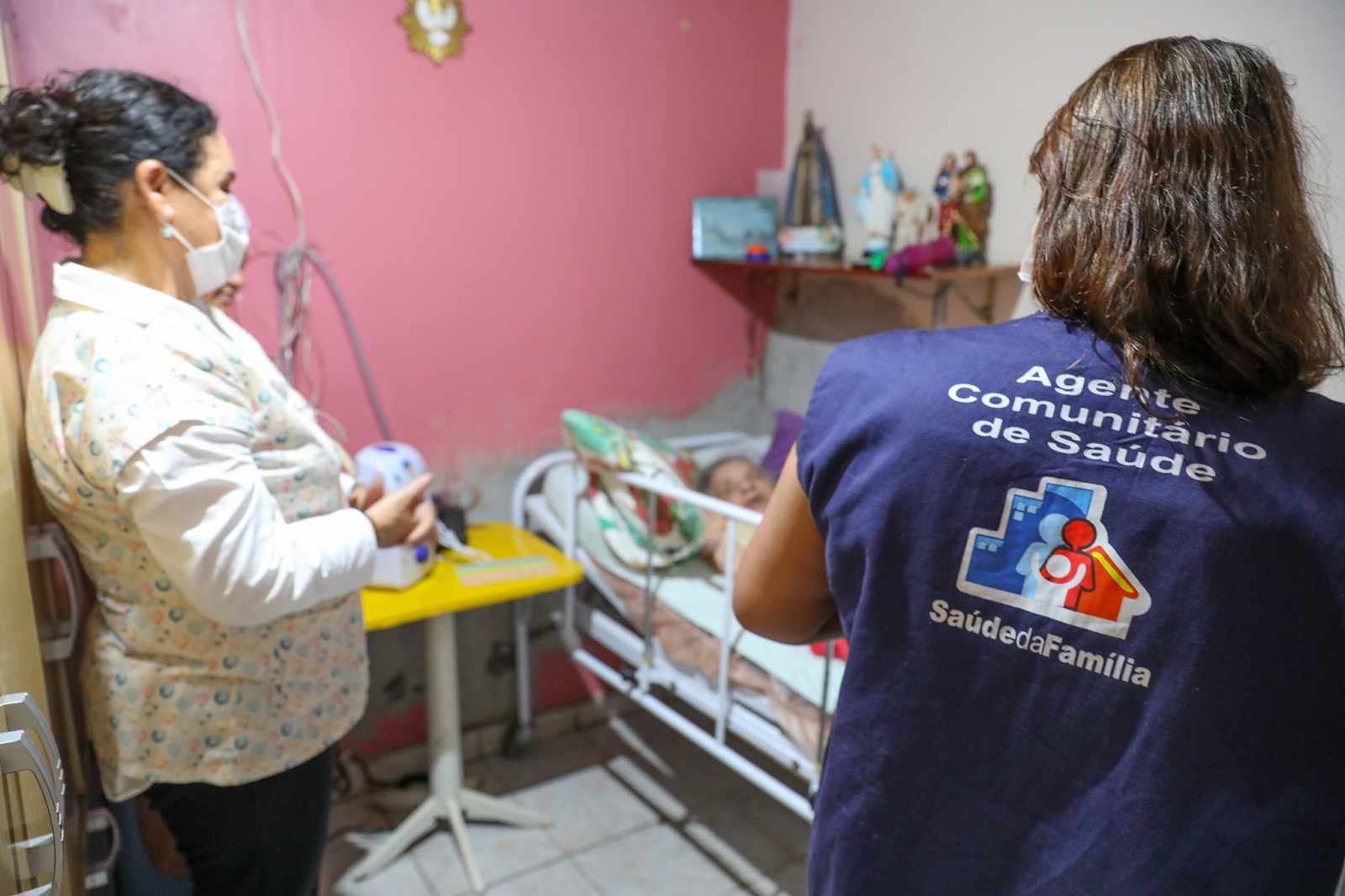
“Community health worker in the Brazilian public health system” by Paulo H. Carvalho/Agência Brasília is licensed under CC BY 2.0.
——————————
References
- International Conference on Primary Health Care. (1978). Declaration of Alma-Ata. WHO Chronicle, 32(11), 428–430.
- Waitzkin H, Iriart C, Estrada A, Lamadrid S. Social medicine then and now: lessons from Latin America. Am J Public Health. 2001 Oct;91(10):1592-601. doi: 10.2105/ajph.91.10.1592. PMID: 11574316; PMCID: PMC1446835.
- Berardi, M. K., White, A. M., Winters, D., Thorn, K., Brennan, M., & Dolan, P. (2020). Rebuilding communities with empathy. Local Development & Society, 1(1), 57–67. https://doi.org/10.1080/26883597.2020.1794761
- Douglas H, Georgiou A, Westbrook J. Social participation as an indicator of successful aging: an overview of concepts and their associations with health. Aust Health Rev. 2017 Aug;41(4):455-462. doi: 10.1071/AH16038. PMID: 27712611.
- Debre, I. (2025, June 18). Argentines reel from health care cutbacks as President Milei’s state overhaul mirrors Trump’s. Associated Press News. https://www.ap.org/news-highlights/spotlights/2025/argentines-reel-from-health-care-cutbacks-as-president-mileis-state-overhaul-mirrors-trumps/
- Reyes, E. (2024, July 16). These L.A. health teams go door to door with a question: What do you need? Los Angeles Times. https://www.latimes.com/california/story/2024-07-16/these-la-health-teams-go-door-to-door-asking-what-do-you-need
 Yale Global Health Review