BY KAI ELLIS
At the end of 2024, approximately 1.4 million children aged 0 to 14 were living with HIV worldwide.1 Strikingly, the vast majority of these children resided in sub-Saharan Africa, where limited access to antiretroviral therapy continues to determine life expectancy and quality of life.2 Access to essential medicines is not merely a health concern, but a fundamental human right. Persistent inequities in their distribution underscore the urgent need for a rights-based approach to global health. This article examines examples of these inequities in sub-Saharan Africa, analyzes their structural causes, and connects them to the World Health Organization’s (WHO) human rights framework that offers pathways to address these challenges.
Antiviral drugs are crucial to achieving the global vision of zero new cases of viral diseases, including COVID-19, by ensuring sustainable and equitable access to treatment. Yet Africa faces numerous obstacles, such as inadequate infrastructure, weakened health systems, and rising healthcare costs, all of which have deepened inequities in access to medical services during the COVID-19 pandemic. The pandemic also prompted an increased reliance on phytotherapy (herbal medicine) across the continent, largely due to essential drug shortages.
Shortages stemmed from multiple factors, including travel restrictions, declining incomes, and higher transportation costs. For example, in Nigeria, about 70% of drugs are imported, while the production of local formulations has declined.3 As a result, the combination of reduced domestic manufacturing and global lockdowns during COVID-19 led to severe shortages of quality-assured essential medicines in the country. Consequently, the limited availability of antiviral and antiretroviral drugs for combating COVID-19 and other endemic diseases in Africa has created a deeply concerning situation.3
These disparities reveal that the problem is not simply scarcity, but the unequal distribution and affordability of vital medical resources. International intellectual property and patent laws, particularly the Trade-Related Aspects of Intellectual Property Rights Agreement (TRIPS), further constrain the production of affordable generic medicines by granting extended patent protections to pharmaceutical companies. These protections delay the entry of lower-cost generic alternatives into the market, limiting access to life-saving treatments for low- and middle-income countries.4
The protection of intellectual property (IP) rights, granting international legal authority through the World Trade Organization (WTO) under TRIPS, has long been a contentious issue. Debates over whether IP protection hinders access to affordable medicines have intensified, especially amid the vaccine inequities exposed during the COVID-19 pandemic. Although the TRIPS Agreement contains several flexibilities, such as compulsory licensing, which allows governments to authorize the use of patents without the patent holder’s consent in certain situations, these measures are often underutilized.5
The WHO Constitution and Article 12 of the International Covenant on Economic, Social, and Cultural Rights both affirm that the right to health includes access to medicines. The WHO’s human rights-based approach to health outlines four key components: availability, accessibility, acceptability, and quality. In sub-Saharan Africa, progress across these areas remains uneven.
Availability is undermined by chronic shortages of essential medicines and limited local pharmaceutical production, leaving many countries dependent on imports that are vulnerable to global supply disruptions. Accessibility remains restricted by high out-of-pocket costs, weak distribution networks in rural areas, and persistent inequalities affecting women and marginalized populations.
Acceptability has seen modest improvement through community-based initiatives and culturally sensitive programs, yet many health services still lack the trust or cultural alignment needed for sustained patient engagement. Finally, quality is compromised by counterfeit drugs, inconsistent regulatory oversight, and shortages of trained healthcare workers, all of which threaten treatment safety and effectiveness. Addressing these gaps through a rights-based framework is essential to achieving equitable and sustainable access to healthcare in the region.6
In conclusion, inequitable access to medicines undermines both public health and basic human dignity. In sub-Saharan Africa, persistent shortages of essential medicines, dependence on imports, and weak healthcare infrastructure continue to limit the region’s ability to meet even the most fundamental health needs. Strengthening WHO frameworks, reforming intellectual property laws, and expanding local and generic drug production represent vital steps toward reducing these disparities. Universal access to essential medicines is not optional; it is a moral and legal imperative at the heart of global health justice.
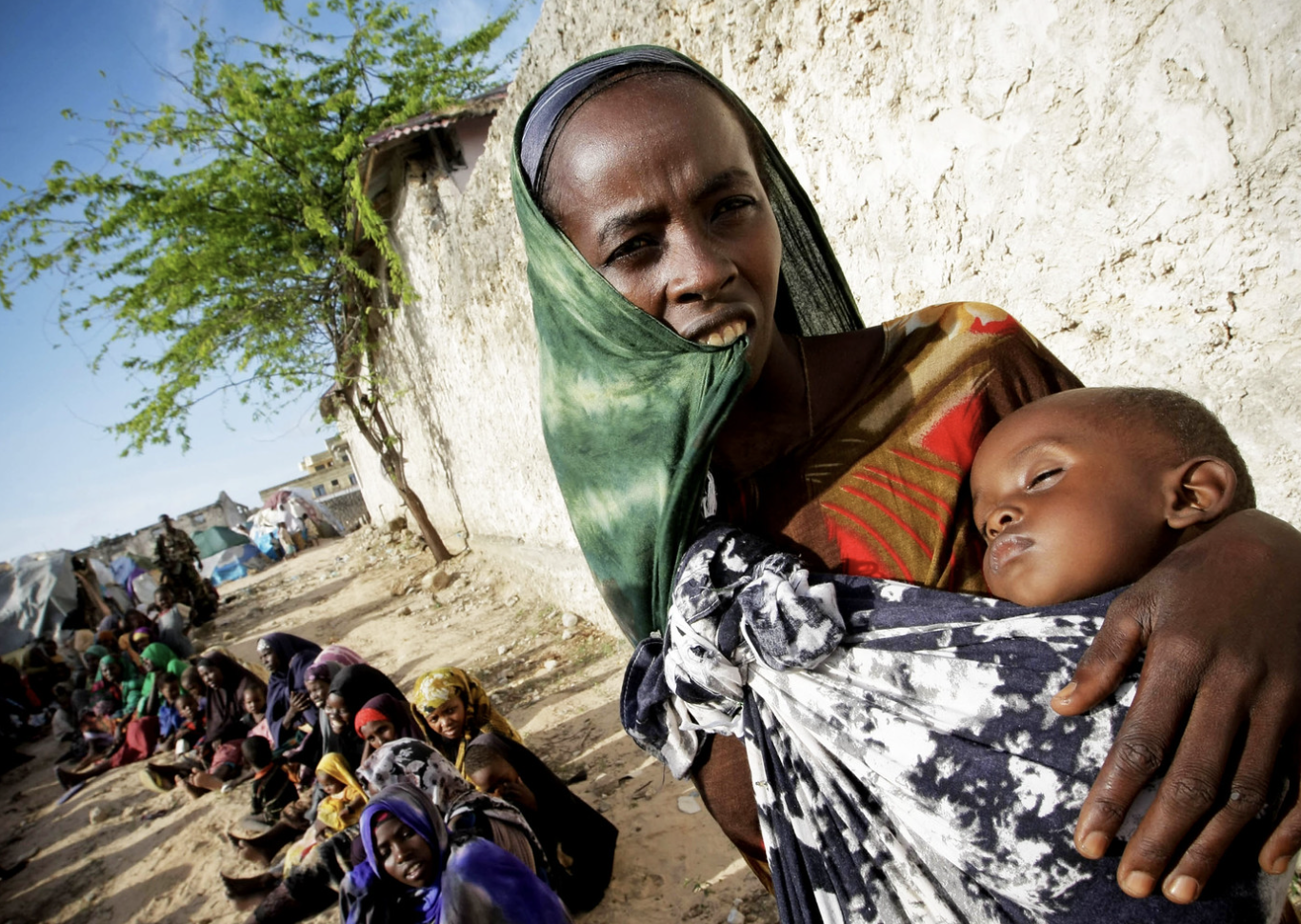
Figure 1. A Somali woman holds a malnourished child while waiting for medical assistance in Mogadishu, Somalia. Image courtesy of United Nations Photo via Flickr. https://www.flickr.com/photos/un_photo/6025434303
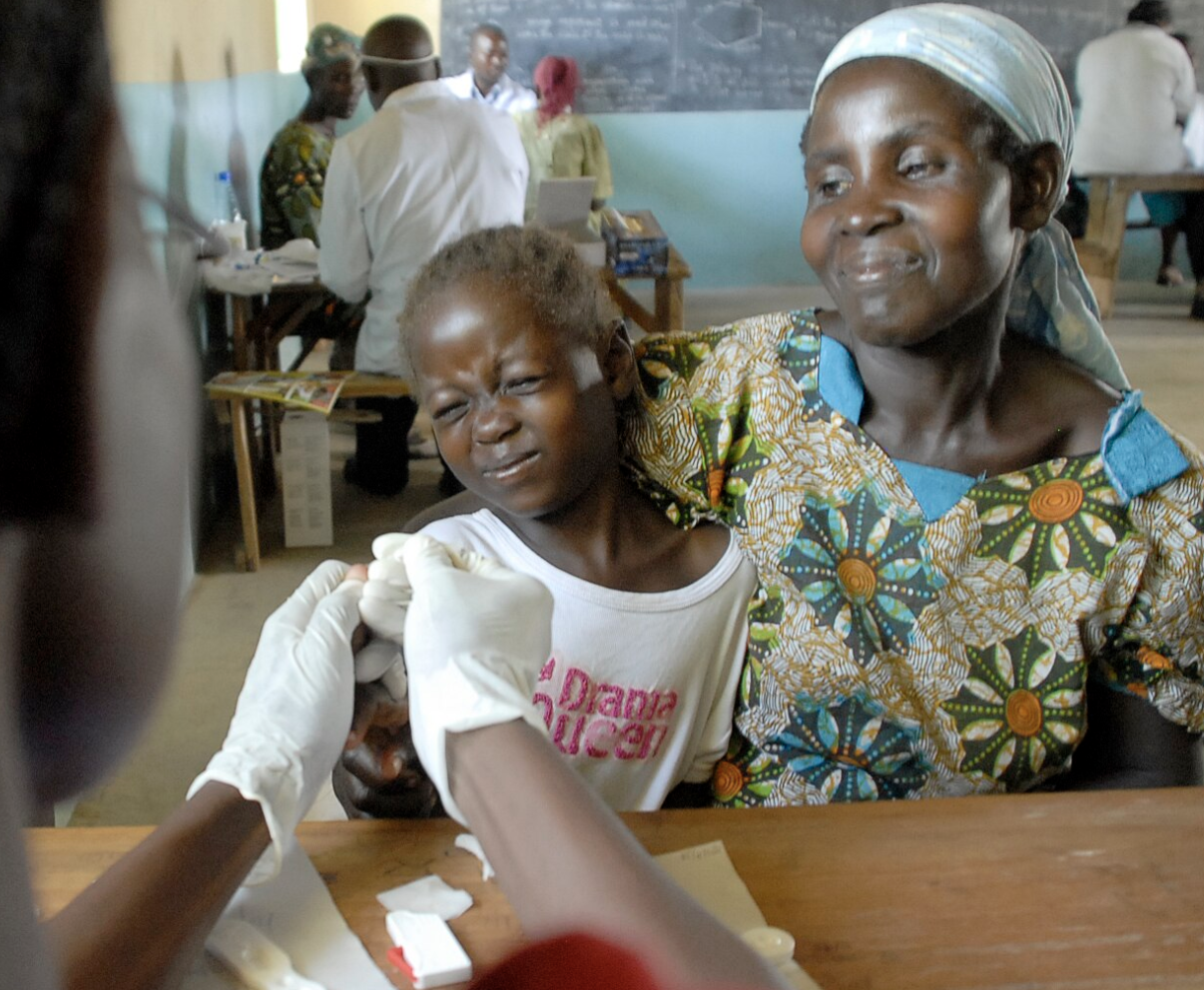
Figure 2. A girl receives a malaria vaccine while accompanied by her mother in Kisumu, Kenya. Image courtesy of Rick Scavetta via Wikimedia Commons. https://commons.wikimedia.org/wiki/File:U.S._Army_medical_researchers_take_part_in_World_Malaria_Day_2010,_Kisumu,_Kenya_April_25,_2010.jpg
——————————
References
- Data on the HIV response. https://www.who.int/data/gho/data/themes/hiv-aids/data-on-the-hiv-aids-response.
- HIV Statistics – Global and Regional Trends. UNICEF DATA https://data.unicef.org/topic/hivaids/global-regional-trends/.
- Rackimuthu, S. et al. Antiviral and antiretroviral drug shortages amidst COVID-19: How Africa is struggling. Innov. Pharm. 12, 7–7 (2021).
- WTO | intellectual property – overview of TRIPS Agreement. https://www.wto.org/english/tratop_e/trips_e/intel2_e.htm.
- Trade‐Related Aspects of Intellectual Property Rights Flexibilities and Public Health: Implementation of Compulsory Licensing Provisions into National Patent Legislation – McGIVERN – 2023 – The Milbank Quarterly – Wiley Online Library. https://onlinelibrary.wiley.com/doi/10.1111/1468-0009.12669.
- Human rights. https://www.who.int/news-room/fact-sheets/detail/human-rights-and-health.
 Yale Global Health Review
