
BY RISHABH GARG
El Salvador’s Centro de Confinamiento del Terrorismo (CECOT) is the largest prison in the Western Hemisphere with a capacity of 40,000 inmates.1 Construction of the massive 57-acre prison began in March 2022 as part of President Nayib Bukele’s anti-gang crackdown. The facility was built specifically to imprison “Maras,” gang members described as “the most dangerous terrorists who tormented the streets.”1 Under Bukele’s campaign, the government of El Salvador declared a “state of exception,” which permitted the mass arrests of suspected gang members without due process.2
However, in early 2025, CECOT expanded into something else entirely: a destination for hundreds of deported Venezuelans sent from the United States. The transformation happened quickly. Earlier this year, President Bukele offered the United States an unprecedented arrangement: allowing for the transfer of foreign and American prisoners to El Salvador’s mega-prison.2
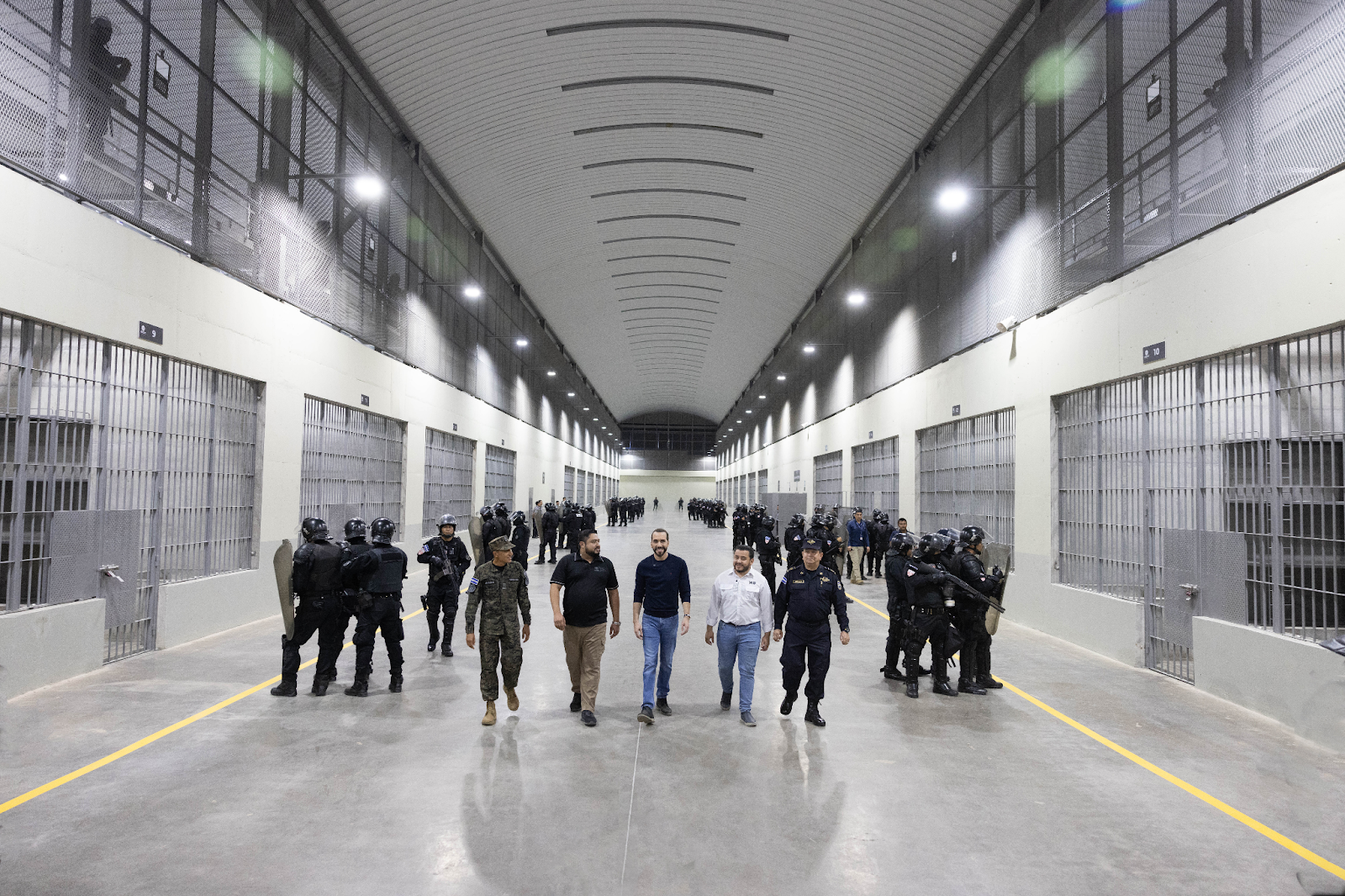
Figure 1 | President Nayib Bukele during a visit to CECOT. Image from Wikimedia Commons (CC0)
Bukele’s rationale was primarily financial—the facility was half-empty and needed additional inmates and fees from other countries to sustain its operations.2 Over a single weekend in March 2025, the Trump administration deported approximately 300 Venezuelans with alleged connections to the Tren de Aragua (TdA) or Mara Salvatrucha (MS-13) gangs to CECOT.2 TdA, a Venezuelan criminal organization, is known for trafficking, extortion, and violent crime across Latin America, while MS-13 originated in Los Angeles and later expanded throughout Central America. The White House framed the deportations as necessary to “protect the safety and security of the American people,” pledging to use “every possible tool” at its disposal.3
The speed and scale of these deportations raised immediate questions about the legality of the process itself. In the Supreme Court case Noem v. Abrego Garcia, the court found that Kilmar Armando Ábrego García had been illegally deported to CECOT, in violation of a withholding order that explicitly forbade sending him to El Salvador due to fear of persecution or torture.4 Specifically, under the U.S. Constitution’s Convention Against Torture, it is prohibited for the government to deport individuals to countries where they face a “clear probability” of torture or inhumane treatment.4
García’s case also drew attention to the use of expedited removal, a process first implemented in 2004 to fast-track deportations of individuals apprehended within two weeks of entry and within 100 miles of the border.5 The policy was later expanded in 2017 to apply to anyone who had entered the country within two years, extending its geographic reach nationwide. Today, expedited removal can be applied throughout the United States, often regardless of time since entry. This allows for the rapid deportation of individuals without pending immigration cases, and sometimes even detaining them directly in court after previous removal orders have been dismissed. However, the policy still requires removal proceedings to consider a detainee’s credible fear of torture or persecution—a safeguard that is often overlooked, as in the case of Garcia.5
Further, the cases of Venezuelan nationals Edicson Quintero Chacón and José Manuel Ramos Bastidas outline the concerns surrounding these deportations. Both men were labeled as members of TdA after being detained during immigration raids in Texas, based solely on unverifiable information.6 For instance, Ramos told reporters that he was detained “simply because of my tattoos. I am not a criminal.”6 Subsequent investigations revealed that neither man had a criminal record or any confirmed ties to organized crime. Their experiences illustrate how flimsy evidence and rushed classification procedures resulted in wrongful imprisonment at CECOT.7
These “oversights,” as described by the White House in Noem v. Abrego Garcia, were not only illegal but also in clear violation of the right to due process and the Convention Against Torture.4 They demonstrate that there was no adequate mechanism to determine whether deportees were actually affiliated with gangs or if sending them to El Salvador would subject them to inhumane treatment.4 Reports from former detainees describe torture in the form of beatings, electric shocks, prolonged solitary confinement, and deprivation of food and medical care, all intended to extract confessions or maintain control over prisoners.8
The reported conditions at CECOT raise serious human rights concerns. Human Rights Watch documented cases of deportees being held incommunicado—denied contact with family members, lawyers, or consular officials for extended periods—and subjected to torture upon arrival.8,9 Their investigation found cells so overcrowded that detainees were forced to sleep on the floor or standing, sometimes in complete darkness, with only thirty minutes per day outside their cells. In one documented case, a young construction worker reported being beaten with batons for an hour upon arrival, then sent to a dark basement cell with 320 detainees, where guards and other prisoners continued to beat him daily, breaking a rib.8 Others described being forced to kneel naked for hours or submerged repeatedly in barrels of ice water until they nearly drowned.8
The organization also documented over 3,300 children, some as young as 12, detained at the facility, many of whom had no gang affiliations, with 66 documented cases of minors subjected to torture and ill-treatment.10 These accounts illustrate the severe overcrowding, torture, and deprivation that exist within the Salvadoran prison system.

Figure 2 | Protest in Dallas against the Trump administration’s deportations, 2 February 2025. Image by mikhail.kelner, via Wikimedia Commons (CC BY 2.0).
These human rights violations demand immediate action and systemic reform. The U.S. deportation process must implement enforceable safeguards to ensure proper hearings and to prevent deportation to countries where individuals may face torture. With over 300 Venezuelans deported in a single weekend, more than 3,300 children detained, prisoners subjected to torture or ill-treatment, numerous cases like Kilmar Armando Ábrego García, in which federal court orders were ignored, and ongoing rapid deportation of individuals, the need for reform is urgent.7,10 Individuals who were wrongly deported must be returned and provided with legal recourse. Families unjustly separated must be reunited, including the immediate release of children falsely accused of gang affiliation. Human rights organizations must continue monitoring and reporting on these practices, and the international community must hold both governments accountable under international human rights law.
——————————
References
Goebertus, J. El Salvador: Children to Be Moved to Adult Prisons. Human Rights Watch. https://www.hrw.org/news/2025/02/24/el-salvador-children-be-moved-adult-prisons (2025).
Inside El Salvador’s Giant Prison with Photographer Juan Carlos. RFI. https://www.rfi.fr/en/video/20250926-inside-el-salvador-s-giant-prison-with-photographer-juan-carlos (2025).
Pomeroy, R. El Salvador Deports and Incarcerates U.S. Citizens. The Guardian. https://www.theguardian.com/world/2025/feb/04/el-salvador-deportees-incarcerated-us-citizens (2025).
President Trump Delivers Justice for Terrorists, Security for Americans. The White House. https://www.whitehouse.gov/articles/2025/03/president-trump-delivers-justice- for-terrorists-security-for-americans/ (2025).
Opinion in Case No. 24A949. Supreme Court of the United States. https://www.supremecourt.gov/opinions/24pdf/24a949_lkhn.pdf (2025).
Lee, C. & Schneid, R. The Legal and Political Battle Over Kilmar Abrego Garcia’s Deportation. TIME, https://time.com/7291858/kilmar-abrego-garcia-returned -criminal-charges/ (2025).
Trevizo, P. He Came to the U.S. to Support His Sick Child. Then He Disappeared from a Texas Detention Facility. The Texas Tribune, https://www.texastribune.org/2025 /07/18/trump-deportation-immigration-asylum-el-salvador/ (2025).
People Detained at El Salvador’s CECOT: Holding Trump Accountable. American Immigration Council. https://www.americanimmigrationcouncil.org/press-release /people-detained-el-salvador-cecot-trump-accountable/ (2025)
Human Rights Watch Declaration on Prison Conditions in El Salvador, JGG v. Trump Case. Human Rights Watch. https://www.hrw.org/news/2025/03/20/human -rights-watch-declaration-prison-conditions-el-salvador-jgg-v-trump-case (2025).
Tracking the CECOT Disappearances. National Immigration Law Center. https://www.nilc.org/resources/tracking-the-cecot-disappearances/ (2025).
 Yale Global Health Review