BY TRIPP ROSENFELT
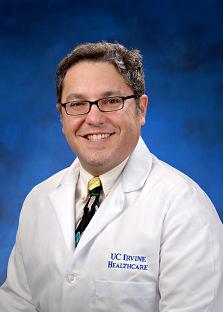
Cristobal Barrios, Jr., M.D., FACS / President, CEO & Chief Medical Officer
Cristobal Barrios Jr., M.D., FACS, is a longtime IMAHelps volunteer who was appointed president and CEO in January 2023. Dr. Barrios is IMAHelps’ chief representative with hospitals and government officials.
Dr. Barrios is a board certified General Surgeon with added qualifications in Surgical Critical Care. He is a Health Sciences Associate Clinical Professor of Surgery at the UC Irvine School of Medicine where he also serves as Assistant Dean of Admissions. Dr. Barrios is the Director of the UCI’s Trauma Division Research Program and Director of the Critical Care Core Lecture Series. Since 2011, Dr. Barrios has participated in IMAHelps missions to Nicaragua, Peru, El Salvador, Paraguay and Ecuador.

Ines Allen / Founder & Chairwoman Emeritus
Ines Allen co-founded IMAHelps with her husband, Tracey, in 2000. She was appointed Chairwoman Emeritus in January 2023 following the appointment of Dr. Cristóbal Barrios, Jr. to the position of President and CEO.
Originally from Quito, Ecuador, Ines co-founded IMAHelps after volunteering for many years with the Flying Samaritans, a group of dentists and doctors who fly small planes into remote communities in Baja California, Mexico to provide care for some the region’s most impoverished inhabitants. Ines is responsible for overall medical mission planning and implementation.
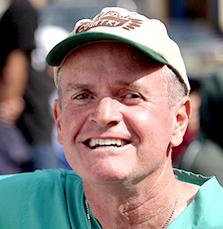
Jeff Crider / Vice President & Communications Director
Jeff Crider provides IMAHelps with communication support in English and Spanish with news media and government officials. He frequently accompanies IMAHelps President and CEO Dr. Cristóbal Barrios, Jr. in meetings with foreign government officials. He also documents IMAHelps medical missions with his photography and develops content for the IMAHelps website. In 2021 he authored the 174-page book, A Vision of Hope: The First 20 Years of IMAHelps, which documents the first two decades of IMAHelps history. Jeff previously worked as a reporter for several Southern California newspapers, including The Press-Enterprise in Riverside, The Desert Sun in Palm Springs, and the Imperial Valley Press in El Centro, where he covered economic, political, and social issues on both sides of the U.S.-Mexico border.
—————————————————————————————————————————————
Duffle bag medicine can be a mixed bag.
Spend time in any remote NGO medical clinic, you’ll likely experience the good, bad, and ugly associated with “missionary field medicine;” where volunteers deliver care in challenging and underserved environments all the while grappling with cultural, financial, political, and ethical obstacles.
While non-profit NGOs like Doctors Without Borders, Partners in Health, and Flying Samaritans are globally renowned, there are thousands of smaller NGO’s working around the globe and under the radar at varying degrees of clinical scale and efficacy.
To better understand the dynamics driving these smaller organizations, YGHR sat down with the team at IMAHelps (https://www.imahelps.org/) — a California-based 501(c)3 secular non-profit that has treated over 100,000 patients across Central and South America since its inception in 2000. Now in it’s 24th year, IMAHelps has no salaried employees or overhead – instead it relies entirely on donations of funding, volunteer time, equipment, and medicine.
YGHR: What is IMAHelps’s Origin Story?
Ines Allen: I co-founded the organization with my husband, Tracey, to provide free medical, dental, surgical and prosthetic care to the poor. I had already been volunteering with the Flying Samaritans in Baja California, Mexico for nearly 20 years. My brother, Dr. Antonio Gonzalez, is a dentist. I worked with him for many years as his dental assistant. We would fly to remote communities in Mexico on weekends to provide free dental care to the poor. After a while, people started asking us if we could return with a doctor or surgeon and provide more services. That’s what gave me the idea of organizing medical missions with a wide range of services. Tracey then suggested I create my own nonprofit medical mission group and that we focus on my native country of Ecuador. Ecuador has a great deal of poverty and many people there suffer from unmet healthcare needs. I grew up in poverty in Quito and lost my older brother, Raul, at 15, because of an undiagnosed heart problem. We knew he was ill, but my parents could not afford to take him to see a specialist. So my brother’s death was a direct consequence of my family’s poverty in Ecuador. This is why I have so much sympathy with impoverished in Ecuador and around the world.
YGHR: Describe the very first steps IMAHelps took in the field?
Ines Allen: I organized an exploratory mission to Ecuador in 1999 with a team of 22 volunteers as a test run. I initially recruited doctors from my network of contacts in the Flying Samaritans. I also recruited surgeons from the U.S. Navy Base in San Diego, who had experience working on overseas medical missions in less than ideal circumstances. I was later able to expand our base of volunteers through word of mouth referrals.
YGHR: What were IMAHelps’ early challenges?
Ines Allen: One early challenge was trying to figure out what supplies we were going to need for surgeries on each mission. I was a dental assistant, not a surgeon. In the beginning, I had no idea what supplies we would need or what types of procedures we would be doing because I didn’t know what kind of cases we were going to have. This was all information I had to learn. I quickly realized I not only needed to recruit surgeons, but surgical techs who could help me identify the kinds of supplies we would need for each mission. I learned that we needed to try to estimate how many cases we would do before each mission, and we needed to be prepared for any patient situation we might encounter. Over time, we have refined our internal processes to the point where we pretty much know what we will need for each mission and how much it will cost to purchase the medicines and supplies.
YGHR: What were the early successes?
Ines Allen: From our earliest days, our volunteers performed cleft lip repairs and other surgeries to remove facial deformities that often leave people ostracized and unable to find work. One of our first surgeons, Dr. Kenny Siporin, removed a hairy nevus from a young woman who aspired to become a dentist. Another one of our volunteers, Dr. Bill Domb, paid for that patient, Gabriela, to come to California to study dentistry at Loma Linda University. Gabriela is now working as a dentist in Ecuador. Our early successes included recruiting people like Robert Openshaw, our longtime prosthetist, who joined us in 2007 on a mission to El Puyo in the Amazon jungle and has been with us ever since. Robert has fitted more than 600 impoverished men, women and children with prosthetic limbs, enabling many of them to get up out of their wheelchairs and walk again.
YGHR: Can you share the growth and scope of IMAHelps from inception to today?
Ines Allen: We started in Ecuador with 22 volunteers. Over time the size and scope of our missions grew and we eventually started to organize medical missions in different countries. Over the past 24 years, we have organized missions in nine countries with as many as 130 volunteers from almost every medical specialty… Our missions typically last seven days, which is long enough to make a positive impact but not so long as to be a burden to people’s schedules. This way, we are able to recruit volunteers of all ages and from virtually every medical speciality. We typically treat over 5,000 patients on each seven-day mission and provide more than 200 surgeries, many of which were life-changing for the patients.
YGHR: What have been the biggest surprises (good and/or bad) since inception?
Dr. Cristóbal Barrios: The issues that surprise us the most are the amount of politics and the logistical hurdles that we have to overcome in each country. We stay out of politics as much as possible. However, one time we had to cancel a mission because of violent political unrest with protestors literally blocking access to the hospital where we were supposed to work. The best surprises are the lasting friendships that sprout from each mission. Hospital employees are usually a little hesitant and guarded when we arrive. But by the end of the mission we see tearful goodbyes with our volunteers exchanging their social media information with their new friends so they can keep in touch with one another.
YGHR: Any uniquely hard, early lessons learned?
Ines Allen: Customs. For many years, we purchased supplies for each mission in the United States and then shipped our supplies to the mission location. But we learned …that this wasn’t always a good strategy. Every country has different policies and procedures for processing medical supplies and equipment through customs. Some ministries of health … assign people in the government to work with us to make sure our cargo gets cleared through customs and delivered to the hospital where we have agreed to work without any unexpected fees or surprises. Other countries have more complicated structures and bureaucracies. Sometimes we encounter corruption. We have had situations where our cargo has been tied up in customs and where customs officials have demanded “fees” to release our cargo. In some countries, the ministry of health has no control or influence over their customs department. So, to avoid these issues, we now simply make arrangements with the hospital hosting us to order surgical supplies through their purchasing department. Some hospitals also allow us to use their supplies if we agree to pay to replenish their inventories.
YGHR: How has the mission focus evolved or changed?
Ines Allen: We have always focused on Latin America, mainly because of geographic proximity, which makes it more affordable for our volunteers to travel, particularly our support staff, such as nurses, surgical techs, and interpreters. However, we are now starting to lay the groundwork for missions in Asia… In the coming years, I see IMAHelps quite literally around the world.
YGHR: How does IMAHelps think about and work through the ethical challenges associated with field work?
Dr. Cristóbal Barrios: The ethical questions are ones I am frequently asked when I speak about global surgery/health. The two principle areas of interest or concern involve the use of resources and follow up regarding long-term care and the possibility of complications. To answer each, IMAHelps procures and uses its own supplies. We do not use any local resources so as not to deplete local resources that a hospital may find difficult to replace after a mission. To help address complications, IMAHelps teams with local physicians for follow up care and we provide them with our contact information so they can contact us quickly with any questions. We also avoid performing complex surgeries that may result in complications, especially complications that may be difficult for local surgeons to manage due to unfamiliarity. We also identify and partner with social workers whenever possible at each mission site. This is particularly important for patients with chronic illnesses, since they can provide patients with continuing care.
YGHR: Clinically, what really moves the impact needle in the field with your patient populations?
Dr. Cristóbal Barrios: The greatest moving of the needle is in the OR and in the prosthetics area. Our surgical team can help relieve backlogs in cases that provide immediate changes in people’s lives. For example, we do this with hernias, gallbladders, gynecologic processes, plastics and orthopedic issues. These operations can allow patients to return to society and enjoy an improved quality of life that can impact them socioeconomically. This was certainly the case with our neurofibromatosis “elephant man” case from Paraguay in 2019, which was widely publicized (https://www.washingtonpost.com/health/2019/06/13/rare-skin-disease-left-man-isolated-alone-surgery-is-helping-give-him-back-his-life/)
YGHR: How does IMAHelps think about, work with and partner with, local, regional and national governments in geographies, local providers, and local NGO’s where you work?
Jeff Crider: We meet first with the consulates of the countries of interest to us to assess their interest in having us organize medical missions. They set up meetings for us with the Minister of Health and their designated coordinator of international medical missions. The Ministers of Health tell us where they geographically have the highest levels of unmet healthcare needs. …Our surgical team will then decides which hospital is the best option for our mission, based on the quality of their medical equipment as well as the number of ORs they are willing to make available to us. The administrator of the hospital we select connects us with appropriate hospital staff, social workers as well as local pharmaceutical supply companies so we can figure out the remaining logistics needed for our missions.
YGHR: How does IMAHelps measure impact?
Jeff Crider: We know we’re making a difference because the vast majority of our patients are people who are either so poor they’ve never seen a doctor or they are not able to see a doctor regularly. Many of our patients have fallen through the cracks in one way or another, which is why literally thousands of patients line up to see our volunteers when we organize a big mission. We try to measure our impact statistically for every specialty, including internal medicine, pediatrics, gynecology, prosthetics, dentistry and surgery. While the value of services we provide on each mission varies, depending on the number of patients and the complexity of the surgeries, we estimate that our team is able to generate a return on investment of $30 to $100 for every dollar in donations we receive. This is because our volunteers pay for their own travel costs and because IMAHelps has no salaried employees or overhead costs, aside from the fees we have to pay for accounting, storage and sometimes shipping of supplies.
YGHR: What types of volunteers does IMAHelps recruit? And do you accept student volunteers?
Ines Allen: We recruit volunteers from every medical specialty through referrals from our existing volunteers and through the signup form on our website (https://www.imahelps.org/get-involved). We also accept student volunteers after careful screening.
YGHR: What characteristics, skills, and mindsets of volunteers work best and worst
Ines Allen: We like to recruit people who have previous medical mission experience because they know that there can be long days, inconveniences and other surprises that take place on a mission because we are working in foreign countries where things don’t always work like clockwork. While we try to organize each mission as best we can, some things are out of our control and we need volunteers who not only accept that reality but have the ability to adapt to changing circumstances and deliver the not only the best care, but the best version of themselves to our patients. For many patients, we are their only hope.
YGHR: What are the ongoing challenges facing IMAHelps?
Dr. Cristóbal Barrios: Our most acute challenge is simply fundraising to cover the costs of medicines and supplies for each mission… We have also created an associate board comprised of young healthcare professionals who can help IMAHelps continue to innovate as we continue to bring healthcare and hope to underserved communities around the world.
Tripp Rosenfelt can be reached at tripp.rosenfelt@yale.edu.
 Yale Global Health Review